How Do You Make The Thinnest Pane Of Glass? By Accident! Posted: 23 Sep 2013 01:20 PM PDT On face value, it appears to be a scientist's version of a 'knock knock' joke. In actual fact though, graduate student Pinshane Huang and Professor David Muller of Cornell and Germany's University of Ulm were laughing all the way to the Guiness Book of world records with the thinnest pane of glass in the world. A Happy Accident The two scientists were originally trying to form graphene, which is a two dimensional form of carbon. While they were at work on the project, they discovered a mark of some kind on the graphene. As they examined the unwanted blemish on their desired graphene, the electron microscope picked up a silicon/oxygen composition which was the same as glass. It's believed that some kind of air leak was responsible for causing a reaction between the copper foils and the quartz furnace used to make the graphene. This reaction led to the production of the world record breaking glass. A Proven Point So how thin is the thinnest pane of glass in the world? Precisely one molecule thick (or thin). What was even more astonishing and rewarding for the scientists was the fact that using the powerful microscope, they were actually able to see something else. Because the average pane of glass is millions of times thicker than Huang and Muller's discovery, observing it through a microscope simply produces a tangled mess of atoms. The simple two atom thick glass gave Muller another 'first' in the history of science when he was able to see the exact structure of glass first hand. As if the day wasn't already full of discovery, the image taken by the electron microscope of the structure of the glass bore remarkable resemblance to a sketch that was drawn many years ago. Physicist W.H. Zachariasen had an idea of what the structure of glass would look like and in 1932 he put his money where his mouth was by way of a sketch. The accidental creation of the thinnest pane of glass in the world finally gave support to Zachariasen's theory. The Future The ultra thin glass might have various practical uses including use for transistors in smartphones. |
Record Your Dreams With ‘Shadow’ App Posted: 23 Sep 2013 01:03 PM PDT How many dreams can you remember these days? How familiar is the feeling that you've had an extraordinary dream but the more you focus on it the faster it slips away? The new mobile application titled 'Shadow' aims to change all of that by enabling you to track and record your dreams. There has always been an interest in finding out just exactly what goes on in our brains when we're not thinking about it. It seems that the 'Shadow' app will help us to find out exactly what sneaky our subconscious mind is trying to tell us, or hide from us during our sleep. The Vision The interest in sleep patterns is by no means new to the scientific community. The neurology of sleep has been explored for years but scientists are no closer to discovering how our dreams and their content affects us in day to day life or vice versa. It's known that we are able to access information during our sleep that we can't during our awakened state. Unfortunately, 95% of that information disappears within 5 minutes of waking up. It is the opinion of many people that the benefits of remembering our dreams could range from increased self-awareness to acting as a self-guide through difficult times. Shadow aims to build a real time data base of people's dreams. By doing so, users are able to learn any patterns to their dreams. They will find out whether their dreams are affected by social, physical or environmental factors. How It Works In the basic sense, the Shadow app is an alarm clock. Yet instead of waking the user abruptly like a traditional alarm clock would, the app brings us round from the sleeping state at a reduced rate. On awakening the user will:
|
Potential Sale For Blackberry Posted: 23 Sep 2013 12:38 PM PDT After announcing on Friday that 4,500 jobs will be cut, smartphone maker Blackberry has said that it has agreed in principle to sell to a consortium led by Fairfax Financial for $4.7 billion. In a statement Blackberry said that Fairfax, its largest shareholder, had offered $9 a share in cash to buy the struggling company. In New York, trading of Blackberry shares was stopped temporarily pending the announcement. In the announcement, the company said it had “signed a letter of intent agreement under which a consortium to be led by Fairfax Financial Holdings Limited has offered to acquire the company subject to due diligence”. The statement continued with: “Diligence is expected to be complete by November 4, 2013. The parties’ intention is to negotiate and execute a definitive transaction agreement by such date.” Despite these first steps with Fairfax, Blackberry has made it clear that it will still “actively solicit, receive, evaluate and potentially enter into negotiations” with other potential buyers. Fairfax’s chairman and chief executive said, “We believe this transaction will open an exciting new private chapter for Blackberry, its customers, carriers and employees. “We can deliver immediate value to shareholders, while we continue the execution of a long-term strategy in a private company with a focus on delivering superior and secure enterprise solutions to Blackberry customers around the world.” Analysts think that this could be the best option for Blackberry, being able to re-invent and re-organise itself without the scrutiny from Wall Street investors. Brian Colello from Morningstar said, “Based on the company’s disastrous earnings warning on Friday, I think a deal had to happen and the sooner the better. This is probably the only out for investors and the most likely outcome. “The benefit to this sort of takeover is the ability for Blackberry and the consortium to reinvent the company without public scrutiny. It appears that the end game is going to be whether Blackberry can emerge as a niche supplier of highly-secured phones to enterprise customers and governments.” Only time will tell if it is possible for Blackberry to re-emerge from this set-back and once again lead the way in the smartphone market. |
Sony Smartwatch 2 vs Samsung Galaxy Gear Posted: 23 Sep 2013 06:26 AM PDT The smartwatch has been around for some time but the technology of the devices brought to market so far haven't been the Secret Service/James Bond style that everyone pictures when they say the word "smartwatch". Now though, Sony and Samsung seem to have stepped up their game and are going head to head in a considerably more exciting battle of the smartwatches than we've seen to date. Sony Smartwatch 2 Spec Overview
So what does it all mean? Well for a start, the Samsung Galaxy Gear seems to have a sharper display. In fact Samsung are proud to say that the display is bright enough not to be affected by sunlight. No cupping your hand over the smartwatch's face to tell the time. Both the Samsung and the Sony are nicely designed although the Sony Smartwatch 2 offers a little more flexibility for its users with interchangeable straps. Both watches are extremely app friendly (of course), but Samsung have an advantage with this as they've secured partnerships with some of the more popular app developers. Also, when it comes to running apps, the Samsung model might be slightly better as the CPU is faster than its competitors. Bond, James Bond For anyone who wants to pretend they're a spy, the Samsung features some brilliant tools. There's a 1.9 megapixel camera contained in the strap of the camera for the photo opportunity that needs instant capture without fiddling around for a camera or smartphone. Users can also make calls directly from the watch which has a built in microphone and speaker, as well as the Samsung 'S Voice' voice recognition tool. The second version of the Sony Smartwatch doesn't feature these benefits although users can use the watch to call friends and family but only with a Bluetooth headset as there isn't a mic or speakers. But what kind of spy could do without a waterproof watch? Sony's watch allows its user to swim whereas the Samsung will only protect them from a shower. Which is Best? The one thing that will undoubtedly let the Samsung watch down is the fact that it is only compatible with the Samsung Galaxy Note 3. A short way down the road there will be updates to make it compatible with the S3, S4 and Note 2. In comparison, the Sony watch is compatible with any android phone that operates Android 4.0. the options are almost endless. Now though, other companies are hot on the heels of Sony and Samsung trying to push the limits of the smartwatch all the time. |
Voyager Officially Leaves Solar System Posted: 23 Sep 2013 04:42 AM PDT In 1977, two unmanned space crafts were launched to explore space and report back to NASA with information about the major planets: Voyager 1 and 2. Within the first 12 years of launching, both Voyagers returned information about Jupiter, Saturn, Uranus and Neptune. Now though, after 36 years of being in space, NASA is extremely proud to announce that Voyager 1 has left the solar system. Delayed Response In actual fact, although NASA announced the Voyager's departure from the solar system quite recently on September 12th 2013, it appears the leaving date itself was way back in 2012 – August 25th to be precise. So why the big delay on the celebrations? At the moment, Voyager 1 is over 11 billion miles or 17 billion kilometers away from Earth. NASA can't see the spacecraft at all. All that is visible is a radio signal that is being bounced back to Earth from the Voyager which looks like a pale blue light. Unlike travelling out of town, there are no signs which tell concerned onlookers exactly where the Solar System ends. Instead, scientists must look for clues in the direction and number of cosmic rays as well as a difference in magnetic fields. However, the signs just didn't appear to be there. It wasn't until information from a plasma blast that hit the voyager in April 2013 that NASA had any indication that the Voyager was outside of the solar system. The Clue Is In The Plasma In March 2012, the sun emitted a huge blast of plasma which took 13 months to hit the Voyager. When it did hit though and the information was read by NASA experts, they were astonished to see that the density of the plasma was 40 times what they expected it to be. In short, it was the density of plasma they expected to find outside of the solar system. Following this discovery, NASA quickly began to backtrack and look for any other signs of interstellar activity and found another similar event back in October to November the same year. A rise in tone from the plasma instrument on the voyager indicated that the spacecraft left the solar system on August 25th 2012 which is now known as the day when the first man made object went into interstellar space. Officially. The post Voyager Officially Leaves Solar System appeared first on TechBeat. |
FBI Asked Microsoft For Access To Encryption Software Posted: 23 Sep 2013 02:01 AM PDT Sources have revealed that the FBI have a history of asking software companies for backdoors in their encryption software to help them catch criminals. The backdoors would provide government agencies with the ability to wiretap people's computers. As the news broke out that the NSA had spent millions on malware that can be used to override security software, more information on government hacking schemes have come to light. It now seems that the FBI have also been leaning on tech companies to poke holes in their encryption software to allow the agencies easy access to people's private files on their computers. Loaded Questions Peter Biddle was the head engineer of Microsoft's encryption program BitLocker. During a recent interview, Biddle told Mashable that back in 2005 when he was working on BitLocker, he had been approached several times by government agents and asked to put a backdoor in the software. Although the computer software programmer couldn't remember which agency it was that approached him, he could recount the conversations that he had with the agents stating that "at least once the question was more, 'If we were to officially ask you, what would you say?'" In all of the accounts of government agencies asking tech companies to create these back doors, there is one common theme; the question is always asked in a subtle way, dropped in to the middle of a conversation and quickly brushed over if the answer isn't appealing to the agent. In fact, the agencies are very careful not to be caught on record asking for such things. Nico Sell, the lady responsible for the mobile phone privacy app, Wickr was also approached by the FBI and asked "So are you gonna give us a backdoor?" When Sell pushed back and asked for a written request along with the name of the agent's manager, the agent immediately stopped with his requests. FBI Deny Allegations Although the FBI have gone on record as being concerned about encryption software allowing criminals (in particular pedophiles) to hide their activity from agencies, an FBI spokesperson responded to the allegations by saying "The FBI does not ask for backdoors. Period." However, the FBI will continue to push for an expansion on the Communications Assistance for Law Enforcement Act which tells digital communications companies to build software that can easily be wiretapped by agencies. |
Showing posts with label Mobiles Apps. Show all posts
Saturday, 28 September 2013
Sony Smartwatch 2 vs Samsung Galaxy Gear TechBeat
Labels:
Android News,
Hacking News,
Microsoft,
Mobiles Apps,
USA News
Dish On YouTube’s Offline Videos TechBeat
Samsung’s Golden Galaxy S4 Posted: 25 Sep 2013 01:39 PM PDT Samsung clearly don’t want to be left behind in the gold rush. Following the release of Apple’s gold iPhone, Samsung has announced it will be launching its very own golden phone. The new Gold Edition Galaxy S4 will be available in two options, a Gold Pink model or a Gold Brown. The technology company has been showing off the new handsets on its United Arab Emirates social media outlets. It is unlikely that these luxurious handsets will reach global distribution but instead look to be targeted at a well-off demographic, similar to the one that the Nokia Oro was aimed at. But at least Samsung can say it too has a golden flagship product. |
NASA Declares Deep Impact Mission Lost Posted: 25 Sep 2013 09:09 AM PDT On Friday 20, 2013 NASA officially declared the comet hunting Deep Impact mission lost. Although the loss was unexpected, the mission team were more than happy with the $267 million unmanned spacecraft's performance. In the little under 9 years from launch, the spacecraft had managed to travel 4.7 billion miles throughout space sending back a plethora of information that as previously unknown about comets. Communication Lost The last contact was made on the 8th August but since then there has been nothing from the spacecraft. Nobody on the Deep Impact mission team is entirely sure about the specifics which caused communication to fail between control and the spacecraft but it's thought that the most likely reason is a problem with time tagging. A problem with fault protection software reading dates after a certain day could have caused the computers to constantly reboot resulting in the spacecraft losing its place so that radio signals were interrupted and the solar panels pointing the wrong way. The electronics would have become frozen without and the craft would have been inoperable. A good Life Although the team were looking forward to receiving valuable data from Deep Impact for years to come, they're extremely happy with its performance. The space craft lasted up to 3 or 4 times longer than anyone anticipated. The launch of the comet seeking spacecraft came about in 2005. Its first mission was to intercept comet Temple1 with an impact, blasting material from the comet that could be studied. The mission was a complete success and from there on out, the comet hunter was able to provide much more information through various missions. On its travels, Deep Impact has:
|
Welcome Back To Life, Simplenote! Posted: 25 Sep 2013 08:03 AM PDT Simplenote has been dubbed as the “first great notes app“, and in spite of a rocky recent history, it seems that its fans have not lost enthusiasm for the app. The notes app scene has not been idle, with many apps coming into the picture, but with Simplenote’s comeback, the classic app might just be the talk of the town again. If you think about it, Simplenote may not be up to par with all the other notes app out there, especially with developers making sure their new apps can do practically everything. On the other hand, Simplenote does what it says on the tin: keep notes on a day-to-day basis. Simple. Plus syncing with the cloud. Now, thanks to Automattic, Simplenote has been given a new lease on life. The app is now available on iOS, Android, and Mac. The main thing going for the app is that it was built to go fast, and again, stay simple. Users who lean toward all sorts of functionalities for their notes apps might have a beef with, for example, the fact that you can’t refresh or save your notes. They are, however, automatically synced as you go, so there is no need to worry about losing your notes. Simplenote also allows collaborative editing, in the principle of Google Docs. With this new launch, Simplenote is being offered for FREE. Premium features are going to be turned off – at least until the development team finds a “significant value” they can provide. If you’re thinking why should you give up existing apps such as Evernote (which I liken to a notes app on steroids), here’s something from Matt Mullenweg that you can chew on: “You don't open a letter with a chainsaw.” That may be bordering on exaggeration, but if all you really want is a notes app that works – fast and efficiently without all the bling – then Simplenote is what you need. |
James The Robot Bartender Knows When You Want A Drink Posted: 25 Sep 2013 06:24 AM PDT James the robot bartender will chat, serve and recognize when you want drinks thanks to the partnership of a team of professors from Germany, Scotland and Greece. The birth of robot bar tenders isn't particularly newsworthy as there have been other attempts before James. However James, the Joint Action in Multimodal Embodied Systems robot is different to its predecessors due to his social skills. People are Messy While it's been proven that robots are more than adept at mixing a whole host of drinks, the reality of them functioning as well as a human bar tender in a real life situation has always been unlikely. As a rule, robots like clean orderly situations. The chaotic atmosphere of the average pub serves to confuse robots. Robot bartenders in the past have only been able to mix drinks for patrons that have expressly ordered the drinks via a smart device. In reality though, patrons don't like to use devices to order drinks, they prefer to use the traditional signals to indicate that they want a drink. Determining an Order During the project, the European team decided that in order to be able to teach James the social skills necessary for a bar tender, they would have to research people's behaviors when ordering drinks in pubs. Cameras were placed in a number of pubs throughout England and Germany. When the footage was watched, the team discovered that 90% of people who wanted a drink would simply move closer to the bar where they could stare directly at the bar tender who picked up on the signal and took the order. For robots, the subtlety between somebody leaning against the bar and somebody staring over the bar at the bar tender is difficult for them to process. The team had to enable James the robot bar tender to process the information that people were presenting through body language and react in the appropriate way in a split second. A new Bartender is Born The results, published in Frontiers of Psychology show that progress is definitely being made. The project runs until January and the team hopes to bring robotics forward to the point that robot-human interaction is far more natural. |
The Dish On YouTube’s Offline Videos Posted: 25 Sep 2013 05:00 AM PDT There is no arguing that YouTube is the site to go to for video content. Whether it’s music, how-tos, or simply stupid, fun videos, YouTube has got something for everyone. And while there are some people who would not touch the site with a 12-foot pole, YouTube’s stats show that they have the upper hand. Did you know that more than 1 billion users – unique! – visit YouTube each month? Even more mind blowing is the fact that more than 6 billion hours of video are watched each month. That equates to almost an hour for every single person on Earth! And according to Nielsen, YouTube bests any cable network in the US, reaching more US adults in the age range 18-34. (Source) So what’s up with YouTube? There’s the saying that you should not fix it if it ain’t broke. Why are they making some considerable changes? Well, it’s not exactly NOT broke. Or, at the very least, there are certain things that needed improvement, and that’s what the YouTube team has done with recent updates. I don’t know about you, but where I come from, mobile Internet still has a lot of room for improvement. While things have really looked up in recent years, there are still times when I want to curse my telco for being so dumb. And that’s where the ability to watch YouTube videos even without a net connection comes in very handy. In a blog entry last week, YouTube announced that they are going to soon launch a feature that will allow viewers to watch offline videos. There are some important details to know about this upcoming feature:
|
Space Mission To Jupiter’s Moon, Europa Posted: 25 Sep 2013 02:31 AM PDT Just lately there has been alot of talk about missions to Mars and further exploring what can be found on the planet. But a group who call themselves Objective Europa want to go where no one else has thought of going, Jupiter’s moon. The group are looking into the feasibility of sending a one-way crew to this icy moon, which is called Europa, in order to search for knowledge and extraterrestial life. Objective Europa currently is only an online group and are not attached with any legal organisation. The group has stated its aim by saying, “Our purpose is to establish the foundation for and carry out a crewed mission to Jovian ice moon Europa through international crowd-research and participation.” The team is made up of some interesting names and give the possible mission some credibility. There is Kristian von Bengtson, co-founder of Copenhagen Suborbitals, a non-profit organisation that aims to launch humans into space. He is a Danish architect but specialises in manned spaceflight. Another team member is Michele Faragalli, who is a rover mobility specialist for the NASA contractor Neptec Design Group. Jacques Cousteau’s son, scientist and diver Pierre-Yves Cousteau, is an ambassador for the group as well as being a team member. At the moment this mission is nothing more than a concept but the group have opened up various research topic for discussion. They will need to gather information and find out whether it is feasible to send a manned mission to Europa, as well as do cost analysis. So the race is on, will humans land on Mars or Europa first? |
View And Purchase World Renowned Art With The Artsy App Posted: 25 Sep 2013 12:56 AM PDT The digital collectors of art, Artsy.net recently announced the release of their own app for iPhones and touch iPod. The company has been working relentlessly to bring the art world into the online space by connecting with galleries, museums and art fairs around the world to display images of the works on the start up's website. So far, the 150,000 registered users of the site are able to browse and purchase over 60,000 pieces of art from some of the leading galleries around the world. The Artsy App is a further step in Artsy's mission to make art accessible to all. Art in Your Pocket Carter Clevelend, the founder and CEO of Artsy, spoke about the online art network telling LA Times'Culture Monster that "This is the first time such a large selection of artworks from world-renowned institutions has been made available to the public all in one place." The app for iOS7 will serve to increase the visibility of works from various artists, allowing the user to carry thousands of images of famous works of art in their pocket. The price of work ranges from hundreds to millions with artists such as Monet and Jeff Koons Free and Simple The app itself is similar to the site. Users can browse the collections of art and if they see something they like they can view a 2D high-resolution image to scale in a virtual art gallery setting. If the user wishes to buy the work, they can do that with a single tap of the finger. Any works below $10,000 can be bought directly through the Artsy app but dearer pieces will prompt the app to connect the user with the gallery to complete the transaction. For those who never want to miss the birth of a new masterpiece, the app will keep them updated of the upcoming fairs and exhibitions from around the world. The app is updated daily to keep its users abreast of all the exciting action. Educating the Masses The app allows people who wouldn't necessarily go to an art gallery browse works online and even ask experts for advice before purchasing any pieces. Artsy intends to break down some of the barriers between the art world and the general public. The big vision is to make art accessible and as popular as music is. |
Sunday, 11 August 2013
The Porsche Design BlackBerry 10
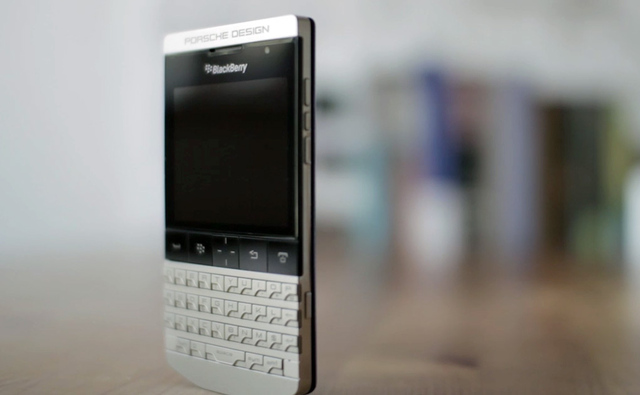
Posted: 09 Aug 2013 03:00 AM PDT I’ve never been a BlackBerry fan, and although I considered giving my dad one briefly earlier this year, there just was not enough to convince me to go for the brand. Even Alicia Keys being appointed its Global Creative Director (whatever the heck that means in real life) didn’t make a difference. Oh, wait! It did. I am not a fan of hers either. Anyhow, it looks like the brand is really doing what it can to get more attention – and try to get people to choose it over competitors. The latest flagship phone, the Porsche Design BlackBerry 10 has been leaked, courtesy of Vietnamese site www.tinhte.vn. Granted, it’s just a leak, but you know how these things go. Someone will always squeal. This is not the first time BlackBerry has gone down this road. Last year, the phone manufacturer teamed up with Porsche Design to launch the Porsche Design P’9981. According to The Verge, that phone was abysmal. Not even the Porsche label was enough to give it a boost. I suppose the $2,000 price tag had something to do with it as well. That flop does not seem to have affected the collaborators, though, as they are giving it another go with the Porsche Design BlackBerry 10, which is rumored to be called BlackBerry P’9982. Makes sense doesn’t it? Here’s another view of the phone, this time from the back. I have to be honest and say that the back looks interesting, but if the rumors are to be believed, it will cost more than $2,000. To that, I say, “Thanks, but no thanks.” Would you give up that much money for a BlackBerry? Porsche Design or not? But, just in case you have an inexplicable love for the brand, you will have to wait at least until the middle of next year, for that is when it is supposed to launch – at the earliest. What do you think of this new BlackBerry phone? |
IKEA to use Augmented Reality for Perfect Furniture Planning Posted: 09 Aug 2013 02:00 AM PDT Swedish home furnishing retailer, IKEA is in the process of planning an update for its iOS and Android app, that will allow customers to fit furniture in their home before ordering using augmented reality. Customers can virtually place up to 90 different products in the room to see how size, shape, colour and positioning would affect their living space. IKEA plans to launch their 2014 Catalogue app for both Android and iOS platforms in a few weeks time, on 25 August. To allow the Augmented Reality part of the application to work, customers will need to put the physical IKEA catalogue into the space where they would like to test the product. Then the app will use the size of the catalogue against the size of the room and will then scale the products on to the handset. The 90 products which are available through the app catalogue include IKEA sofas, bookcases, chairs, desks, chests of drawers and beds. Peter Wright, country marketing manager for IKEA UK & Ireland said, "Our customers want to be able to test out whether the products they've been inspired by in our catalogue will work in their own homes, particularly when it comes to larger pieces of furniture…Offering a way of using mobile technology to enable to test products means the technology has a practical purpose and really helps customers visualise the way their homes could look.” According to the company’s research, “many customers suffer from ‘Square peg, round hole syndrome’ as 14 per cent say they've bought the wrong-sized furniture for their rooms and over 70 per cent say they don't really know how big their own homes are.” IKEA says that the main goal of this app is to help its customers to avoid buying the wrong size of furniture. The printed version of the IKEA Catalogue will contain 50 pages that can also be scanned with the mobile app to receive additional product information, alternative views of products and videos. Thanks to this new app, the next time I visit the big blue monolith, I won’t buy the wrong size table. |
Apple Chargers Replaced in Worldwide Program

Apple Chargers Replaced in Worldwide Program Posted: 10 Aug 2013 06:00 AM PDT Apple are to launch a worldwide programme to replace counterfeit power chargers. The power adaptor replacement programme comes after a woman was reportedly electrocuted while using a non-Apple charger. Apple’s power adaptor take back programme will take place in stores from 16 August to 18 October Consumers can buy an authentic USB adaptor for the equivalent of 10 US dollars (£6.51). Apple chargers normally cost around £15 in the UK. The story is that, Ma Ailun, 23, collapsed and died in China last month after answering a call on her iPhone while it was charging. Apple did not specifically refer to this incident when it launched the charger replacement programme, but said: “Recent reports have suggested that some counterfeit and third-party adaptors may not be designed properly and could result in safety issues. “While not all third-party adaptors have an issue, we are announcing a USB power adaptor take back programme to enable customers to acquire properly designed adaptors. “Customer safety is a top priority at Apple.” Phil Buckle, director general of the Electrical Safety Council, also warned about the dangers of cheap USB chargers. He said: “Whilst everyone loves a bargain, if a cheap electrical product turns out to be fake then it is, at best, a waste of money. At worst, it could result in the death of a loved one. “More than four million counterfeit goods were seized coming into the UK last year and one of the top fakes was phone chargers. This is worrying as faulty electrical goods are a leading cause of severe electric shock in the UK and cause thousands of house fires each year. Counterfeit electrical goods almost always contain incorrect or faulty parts that can overheat or break just days after or on the day of purchase. “If the price is too good to be true, it probably is.” The Apple initiative will take place at Apple stores and authorised service providers for the period 16 August to 18 October. Anyone who wants to accept the offer will have to provide the serial number of their iPhone, iPad or iPod, and hand over a USB charger. The reduced price Apple chargers will be limited to one per Apple device per customer. |
Firefox 23 Has Landed With Stacks Of Features Posted: 10 Aug 2013 04:00 AM PDT Mozilla have officially launched Firefox 23 for Windows, Linux, Android and Mac. The improvements include the addition of a share button, mixed content blocker, and network monitor on the desktop side. Also (and this is no small feature) Firefox 23 comes with a new logo! The new desktop version was available on the organization's FTP servers on August 5, but that was just the initial release. Firefox 23 has now officially been released over on Firefox.com and all existing users should be able to automatically upgrade to it. As always, the Android version is edging out slowly on Google Play. The biggest addition is the new share button and panel for the browser's Social API. Developers can now let users share content with anyone in one click (Facebook users, for example, can use it to share content directly from Firefox, regardless of where they are on the Web). Next is the mixed content blocker, which is designed to prevent non-secure (HTTP) content on a website from being read or modified by attackers by blocking the non-secure content from being compromised. If you didn’t know, mixed content occurs when a webpage containing a combination of both secure (HTTPS) and non-secure (HTTP) content is delivered over a secure data channel to the web browser. Additionally in this release, developers can finally use the new Network Monitor, this works by It breaks down individual website components, highlighting how long it takes for each to load. More details are located on the Mozilla website . There are other Firefox 23 features worth noting, which are noted here taken from the official changelog: NEW: Mixed content blocking enabled to protects users from man-in-the-middle attacks and eavesdroppers on HTTPS pages (learn more). NEW: Options panel created for Web Developer Toolbox. CHANGED: "Enable JavaScript" preference checkbox has been removed and user-set values will be reset to the default. CHANGED: Updated Firefox Logo. CHANGED: Improved about: memory's functional UI. CHANGED: Simplified interface for notifications of plugin installation. CHANGED: Enabled DXVA2 on Windows Vista+ to accelerate H.264 video decoding. CHANGED: Users can now switch to a new search provider across the entire browser. CHANGED: CSP policies using the standard syntax and semantics will now be enforced. CHANGED: input type='file' rendering improvements (see bug 838675). CHANGED: Replace fixed-ratio audio re sampler in webrtc.org capture code with Speex re sampler and eliminate pseudo-44000Hz rate. CHANGED: "Load images automatically" and Always show the tab bar" checkboxes removed from preferences and reset to defaults. DEVELOPER: HTML5 input type="range" form control implemented. DEVELOPER: Write more accessible pages on touch interfaces with new ARIA role for key buttons. DEVELOPER: Social share functionality. DEVELOPER: Added unprefixed request Animation Frame. DEVELOPER: Implemented a global browser console. DEVELOPER: Dropped blink effect from text-decoration: blink; and completely removed element DEVELOPER: New feature in toolbox: Network Monitor. FIXED: Various security fixes. If you are a Web developer, you should take a look at Firefox 23 for developers. Android Firefox for Android also includes the new logo, but it has a swing of its new features specific to Google's mobile platform as well. The biggest addition is a new personalized page called the Awesome Screen, which also completes your URL as-you-type. The "Switch to Tab" option lets you find and switch to any open tab from your Awesome Screen without opening duplicated tabs. Like Chrome for Android, Firefox now hides its navigation bar when scrolling down (you can pull it down from the top of the screen when you need it). The new version also includes basic support for subscribing to RSS feeds with a long-tap in the address bar. Firefox for Android also now lets you change your default search provider from the Firefox add-ons manager. The full Firefox 23 for Android changelog: NEW: Dynamic toolbar hides navigation bar when scrolling down page content. NEW: Basic support for subscribing to feeds (RSS/Atom) with long-tap in address bar. NEW: Add pages to reading list on devices incapable of accessing Reader Mode. NEW: Preliminary implementation of Firefox Health Report for Android (see FAQ). NEW: Added a setting to let users display URLs in the title bar instead of page titles. NEW: Users can now specify a default search engine. NEW: Implemented switch-to-tab. NEW: Added hu and tr to Android multi-locale builds. NEW: Added Serif/Sans Serif font toggle to Reader Mode. NEW: Long press Reader Mode icon to add article to Reading List (try it!). CHANGED: Awesomescreen remembers user entered search terms. CHANGED: CSP policies using the standard syntax and semantics will now be enforced. DEVELOPER: Write more accessible pages on touch interfaces with new ARIA role for key buttons. DEVELOPER: Added unprefixed requestAnimationFrame. DEVELOPER: HTML5 input type="range" form control implemented. DEVELOPER: Dropped blink effect from text-decoration: blink; and completely removed element. FIXED:Various security fixes. If you are having some difficulty in keeping track of all of these updates, then you need not worry. Mozilla will be releasing Firefox 24 in September! t. |
Labels:
Free Software,
Mobiles Apps,
Tech News,
Technology
Friday, 2 August 2013
3.5GB of PlayStation 4 RAM Reserved for OS?
Hong Kong Resident Says Exploding Galaxy S4 Burned His House Down Posted: 01 Aug 2013 08:00 AM PDT Recently we reported on the tragic death of a woman in China who, her family claim, was electrocuted by an iPhone charger. It seems the questions over whether mobile phones present a possible danger will continue to be asked, especially after new claims from a Mr. Du of Hong Kong. He claims that his Samsung Galaxy S4 exploded and caught fire in his hands. Mr Du had apparently been playing the game Love Machine when the handset caught fire. He then tossed the phone onto his flammable sofa. He said that the split-second decision cost him his house, as well as damaging his mercedes. Of course a few factors surrounding this story do make it a little dubious. For example, it was originally reported on by Xianguo. Then there is a question mark over why Mr. Du and his wife were unable to douse the flames that engulfed the sofa before the whole apartment set alight. Yet there are enough similar stories to maybe give the story some credibility. Samsung Hong Kong have said it will analyze chemicals from the scene of the fire to check if any of them could have come from their factory. Last year, an iPhone began smoking on a plane in Australia and an investigation showed the incident was caused by a misplaced screw in the battery cavity. The phone had been repaired by an unauthorized service provider. It could be in this case too, that a rogue part or repair are to blame for the Galaxy S4 exploding, but Mr Du insists that his phone and charger were both original Samsung products. Although his apartment and Mercedes were damaged, thankfully Mr. Du and his wife suffered no injuries from the fire. |
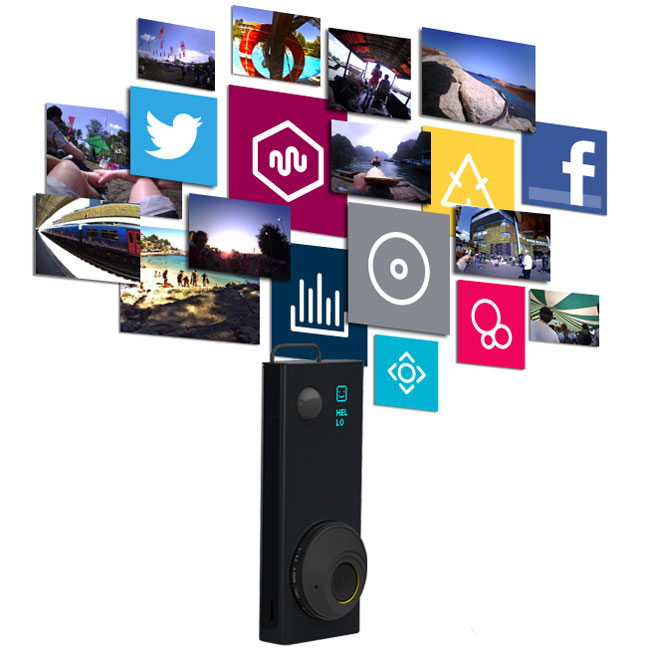
Autographer: The Wearable Camera Posted: 01 Aug 2013 07:00 AM PDT There is a new kid on the block and he’s only small, very small, but really interesting and the makers of the Autographer had this in mind when they created this tiny piece of kit. OMG Life, the company behind it, have realised, in a world where you wish you were always carrying a decent camera in your pocket, but may not have the skills and pockets large enough to photograph things 24/7 -You need a solution and the Autographer camera is designed to solve that problem by making photography a process of look back and see, rather than, hold still and look at the camera. On its website OMG Life highlight a number of use cases and genuinely superb images have been captured with the device. The camera itself, which looks very basic, but attractive, uses a set of on-board sensors (colour,motion and acceleration temperature and magnetometer,) to decide when to take a photo. As long as you’ve turned it on and rotated the lens cap open, it will carry on doing so all day, as long as the battery holds out, which is quite considerable. Alongside the images the Autographer captures time and GPS data and once plugged in via micro USB or connected via Bluetooth, it presents all the pictures into easy-to-manage groups, with a dedicated app for either Windows, MAC or iOS. You can then export these images either as individual shots, videos or GIFs and of course share these at your leisure. The images themselves aren’t always spectacular as the the five-megapixel camera uses a fish-eye lens which captures 8GB worth of 136-degree pictures but often results in blurry and or washed-out or overly-white images. It is not every picture you take with it that makes this device worth it value, it is however, the one in a hundred image that you didn’t know you wanted and had forgotten happened, that comes to light afterwards and that makes Autographer a really nifty piece of kit. Privacy Issues? The question on our lips is what about peoples privacy? OMG Life say that they have attempted to address these privacy concerns in the hardware and the nature of the device, such as, giving the device a yellow lens ring and a notification blink light. But the fact is this: the Autographer is an unassuming, black, small camera with which people aren’t familiar, and won’t notice it. OMG Life say that individual responsibility is key aside from the fact that individuals lacking in responsibility can use the Autographer just as easily as anyone else, this does open up genuine privacy concerns. OMG Life’s website does a good job of suggesting places you might want to use the Autographer. As it stands, the Autographer is a useable, attractive device which has a high price tag and is let down by patchy picture quality and relative lack of custom options for where and when it takes images. At £399, it is slightly expensive, but, it does have good potential to be used in very creative ways. Let’s just hope it is used in that way and not in manner worthy of a jail term… Autographer is available in the following European countries: UK, Germany, France, Spain, Italy, Belgium, Luxembourg, Netherlands, the Republic of Ireland, Portugal, Austria, Bulgaria, Cyprus, Czech Republic, Denmark, Estonia, Finland, Greece, Hungary, Latvia, Lithuania, Malta, Poland, Romania, Slovakia, Slovenia and Sweden. |
A Quick Comparison Of Chromecast & AirPlay Posted: 01 Aug 2013 06:00 AM PDT The television has been around since anyone can remember, and it certainly is one of those things that manufacturers, marketers, and content producers want to exploit. After all, everyone watches TV, right? Google has not left this niche alone and has, in fact, tested the waters in the past. Its new foray into the scene, however, might just be its secret sauce. Enter Chromecast, the thing that everyone has been talking about in very recent times. So what’s all the fuss about the Chromecast anyway? If you look at it, the Chromecast is a diminutive thing. It’s just like a USB stick which you can find practically anywhere. The brilliant thing about it is that when you connect it to your TV, you can stream practically anything from practically any device – tablets, smartphones, and computers. Better yet, it can stream from Apple devices, too! Oh, and did I mention that it’s only $35? But AirPlay can do the same! That is true, and more so, it is built into every iPhone and iPad – and the new Macs, too. Another thing going for AirPlay is that it has been around for quite some time, and users are already comfortable with it. That is, if you’re a Mac user. If you haven’t bought into the awesomeness that is Mac, then you might not be too concerned about comparing Chromecast and AirPlay, else, there is something about Chromecast that might get you interested. Chromecast versus AirPlay There is the price, of course, which Chromecast wins by miles. How about UI? AirPlay taps into the power of iOS design, and in this, it gets the better of Google’s new product. Content? With AirPlay being available for a while now, it is compatible (and integrated) in many other apps and platforms. This is an area where Google has to catch up with, but the idea of being able to stream from Chrome just might give it a boost. The bottom line If you’re open to new technology, then Chromecast presents a very viable option. In the meantime, AirPlay still holds the upper hand, but there is no guarantee it will stay that way. |
WaterBean Filter Purifies Tap Water Posted: 01 Aug 2013 05:00 AM PDT We at Techbeat like our water filtering products and we believe the world can never have enough of them. This new system, called the WaterBean, is an interesting concept in that its goal is to purify tap water AND to reduce plastic bottle waste. Most water filters, such as the NDūR Survival Straw, are designed to filter out bacteria, dirt, micro-organisms and other potentially dangerous substances out of water. And it is this feature that makes them ideal for use in areas that don't have access to clean water, including in developing countries. The WaterBean, however, is designed more for urban consumers that have access to running water all the time, but the water is not pure or clean enough to be drinkable. These consumers will buy and drink bottled water, which generates tons of plastic bottle waste every year. It is believed U.S. consumers spend up to $15 billion on bottled water every year. According to the manufacturer of the filter, Graeme Glen, an average person goes through 167 bottles per year. This generates 1.5 million tons of waste per year, since three quarters of plastic bottles do not actually get recycled. But the WaterBean can be a solution to this problem, as it is designed to encourage users to keep and reuse one plastic bottle for a long time. The system may not have the same purification power as other filters on the market, but it is effective against chlorine, odors and bad taste and also adds magnesium to the water. The filter is very easy to use: after being inserted in the bottle, users are advised to shake the bottle for five seconds and then swirl the water gently around for a while, the idea being that the longer you swirl, the better the water will taste. The WaterBean filters are made of coconut carbon fibers which are safe to be ingested. Each filter lasts about three months and can clean about 140 liters of water, thus having the potential to prevent up to 280 bottles from ending up in the landfill ever year. Glen is currently running a crowdfunding campaign on Indiegogo for the product, aiming to raise $35,000. Backers can get one WaterBean plus two extra filters if they pledge as little as $12. Check out the video below to find out more about how the WaterBean filter works. |
3.5GB of PlayStation 4 RAM Reserved for OS? Posted: 01 Aug 2013 04:00 AM PDT Almost half of Sony's PlayStation 4 RAM memory will be reserved for the operating system, according to press reports. The gaming system will reserve 3.5GB of its 8GB RAM for the OS, which will leave 4.5GB available for games. A report on Digital Foundry also said initially that an extra 1GB of flexible memory will be available for PlayStation 4 games next to the 4.5GB, but only if the console's operating system would be able to function without that 1GB. Other sources later told the publication that the flexible memory would actually be 512MB. Sony has neither confirmed nor denied the figure yet, but only commented on the reports to clarify the situation of direct and flexible memory systems. The company said the reports erroneously suggested that the flexible memory would be borrowed from the operating system and returned when requested. In fact, Sony said, the flexible memory would just be managed by the OS on behalf of the game, it would belong to the game 100% and would never be used by the operating system. Direct memory is the memory allocated to a game according to the traditional gaming model, the company added. "We have no comment to make on the amount of memory reserved by the system or what it is used for,” Sony also said. Digital Foundry also reported that the 3.5GB of memory for OS could actually be reduced once work on the system is complete. Much of the allocated space is designed to support new PS4 system features such as switching between applications, live swapping of games, being able to pause and resume games and others. PS4's rival, Microsoft's Xbox One will reserve 3GB of RAM for its OS. PS Vita role as controller clarified Meanwhile, it was confirmed that the PlayStation Vita will work as a controller for PS4 only on selected games. The confirmation came from Shuhei Yoshida, Sony Computer Entertainment president of Worldwide Studios, on Twitter. Asked about the PlayStation Vita, Yoshida explained that the Vita will work as a controller only for games specifically programmed to allow the use of the handheld device. Nevertheless, the PS Vita handheld console will still be able to run all the games specifically developed for the PS4. The PS4 will launch this holiday season and will retail for $399. What do you think of the PlayStation 4 RAM allocation? Is 3.5GB too much for the OS? Is 4.5GB too little for games? |
Hackers Fail in Plot to Frame Security Expert Posted: 01 Aug 2013 03:00 AM PDT A cyber security expert has been the target of cyber criminals after suffering a number of attacks over the past year. Brian Krebs, who formerly worked for The Washington Post outing online scammers, now blogs about security on Krebs on Security. Back in March he described how his website suffered a denail-of-service attack, whilst armed police officers surrounded his home in Annandale, Virginia in response to false and anonymous emergency call claiming Kreb’s wife had been shot. But the latest attack from the criminals was “the most elaborate” so far. “Earlier this month, the administrator of an exclusive cybercrime forum hatched and executed a plan to purchase heroin, have it mailed to my home, and then spoof a phone call from one of my neighbors alerting the local police,” Krebs explained on his blog. 13 baggies of heroin were sent to Brian Krebs home On July 14 the alleged administrator of a Russian-language forum on ID theft and fraud, who goes by the username “fly” or “Flycracker”, published a post requesting bitcoin donations so that they could purchase heroin from the online marketplace Silk Road. The heroin would then be mailed to Krebs address. However Krebs had already infiltrated the forum and was able to watch the plan unfold. Flycracker, who was unaware that Krebs was observing the situation, raised $200-worth of bitcoins and bought 1 gram or 12 baggies of heroin on Silk Road, using the name “briankrebs7″. Krebs alerted the local police and the FBI of his knowledge and when 13 baggies of heroin arrived on his doorstep, the police arrived to seize it. “Without actually having the substance tested at a lab, I can't say for certain whether this is talcum powder or the real thing,” Krebs concludes, “Nevertheless, if I receive any testing results from the local police, I'll update this blog post.” Krebs has also said that he will reveal more about the identity of Flycracker in a later post. |
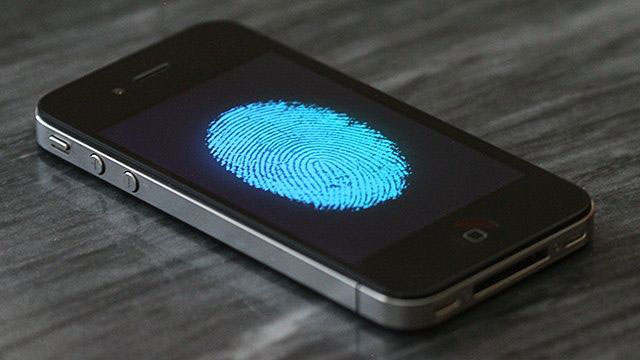
Biometric Finger Sensor for New iPhone Posted: 01 Aug 2013 02:00 AM PDT As you may have heard, there is the slim possibility of a new iPhone being released by those really nice people over at Apple. Well, it appears as though some new evidence has emerged suggesting that Apple's forthcoming iPhone will include a biometric fingerprint sensor (and we all hope it will!). The information has come via a London programmer named as Hamza Sood, who has found some relevant support folders and documentation whilst investigating the beta release of iOS 7. As you no doubt know, developers are given early access to unreleased operating systems in order to assess it and adapt their software to new features and rules. Sood found a folder named 'BiometricKitUI' which was an embedded line of text in code that referenced "Photo of a person holding an iPhone in their right hand while touching the Home Button" and then "A fingerprint that changes colour during the setup process." These snippets are most likely captions accompanying illustrations to help users to setup their new iPhone device. The colour-changing fingerprint suggests that the iPhone has a new home button that will incorporate a biometric sensor. This new sensor could be used for unlocking the phone but also for authorizing payments and even passwords online, if we are to believe the hype. If an API was made available for the sensor then third-party apps must be keen to build on this hardware. Banking, financial and purchasing apps could make their systems more secure and log-ins credentials could be replaced by a biometric finger sensor. Rumours of a built-in fingerprint sensor for iPhones have been around ever since Apple bought the security company AuthenTec last July for $356 million. The deal included many of the company's patents and security technologies, as well as its developments in fingerprint sensors. The new model iPhone is expected to be released around this coming september and will be followed by a cheaper, plastic iPhone, possibly called the iPhone 5C. This model is also expected to come in a range of colours and could, we think, retail for as little as $99. Fingerprint recognition for a telephone..Apple really do ‘Think Different’. |
Labels:
Android Console,
Android News,
Mobiles Apps,
Tech News,
Technology
Saturday, 20 July 2013
Nokia Lumia 1020 Price.
| Nokia Lumia 1020 Price in Pakistan. |
The New Nokia Lumia 1020 Posted: 13 Jul 2013 04:00 AM PDT Nokia have unveiled a new handset, the Lumia 1020, which boasts a feature that allows users to zoom in and reframe their photos without the risk of decreasing image quality. The Lumia 1020 comes with a 41-megapixel sensor and offers highly detailed photos at up to 38MP resolution. This isn’t the first time Nokia have used a 41-megapixel sensor in a phone. The Pureview 808 was launched last year but it did not appeal to many people, mainly due to the fact that it was running the old Symbian operating system. However, Nokia’s new handset runs on Microsoft’s Windows Phone platform. With more than 160,000 apps, hopefully it will prove more popular. It is not just photos that benefit from the extra resolution, but also the video recording capabilites. The user can zoom in four times while recording a 1080p high definition video and six times in a 720P version,without losing any quality. To help prevent shaky videos, the lens system has been mounted on ball bearings. A gyroscope and motors help to counteract any movement so the overall finish is alot clearer and more stable. What The Analysts Have to SayNokia have said that the handset is perfect for people who want to “shoot first,zoom later”. But with stiff competition from Samsung and Apple, is it enough to keep pace?The market research company IDC carried out a survey of smartphone owners to determine what drove them to purchase a particular handset. Of the 23 features suggested, camera resolution came 15th in the list, with people placing more importance on audio quality, battery life, device security and browsing. This suggests that perhaps the handset won’t be the most popular. Nokia have priced the Lumia 1020 at $300, on top of a two year contract. This high price tag will no doubt mean the handset will undergo some scrutiny to make sure it lives up to the cost of purchase. Francisco Jeronimo, a mobile phone analyst at IDC said that “For an amateur or professional photographer who needs a quality camera on the move, this is the best option available on a smartphone. But to be able to compete with Apple and Samsung, Nokia will need to price it aggressively and to increase activities in the stores to show consumers how much better the camera performs against the competition.” “Failing that, the Nokia Lumia 1020 will become a niche product for a niche segment – professional mobile photographers.” The Lumia 1020 goes on sale in the US on July 26, while parts of Europe and China can expect a release date before September. |
WiFi 802.11ac: What You Need To Know Posted: 13 Jul 2013 03:00 AM PDT Recently 802.11ac WiFi devices have started to emerge, but just what is WiFi 802.11ac and How fast is it? 802.11ac is a supercharged version of 802.11n, which is the current WiFi standard, offering link speeds ranging from 433 megabits-per-second (Mbps), through to multiple gigabits per second. To achieve these speeds which are dozens of times faster than 802.11n, 802.11ac works exclusively in the 5GHz band, uses a huge amount of bandwidth (80 or 160MHz) and operates in up to eight spatial streams (MIMO) and a utilizes technology called beamforming. How 802.11ac works: At its core, 802.11ac is essentially an updated version of 802.11n, which itself introduced some very exciting technologies that brought massive speed boosts over 802.11a and g. Whereas 802.11n had support for four spatial streams (4×4 MIMO) and a channel width of 40MHz, 802.11ac can use eight spatial streams and has channels up to 80MHz wide, which can be combined to make 160MHz channels. Even if everything else remained the same, this means that 802.11n has 8x160MHz of spectral bandwidth to play with, vs. 4x40MHz, this is a huge difference that allows 802.11n to squeeze vast amounts of data across the spectrum. 802.11ac introduces 256-QAM modulation (an increase from 64-QAM in 802.11n), which fits 256 different signals over the same frequency by shifting each signal to a slightly different phase. In theory, this quadruples the spectral efficiency of 802.11ac over 802.11n. Spectral efficiency is a measure of how well a given wireless protocol/modulation/multiplexing technique uses the bandwidth available to it. In the 5GHz band, where channels are fairly wide (20MHz+), spectral efficiency is not so important; in the cellular or mobile bands though, channels are often 5MHz wide, which makes spectral efficiency very important. 802.11ac also introduces standardised beamforming (802.11n was non-standardized, which made interoperability an issue). Beamforming is essentially transmitting radio signals in such a way that they are directed at a specific device. This can increase throughput and also reduce power consumption. Beamforming can be done with smart antennae that physically move to track the device, or by modulating the amplitude and phase of the signals so that they destructively interfere with each other, leaving just a narrow, not-interfered beam. 802.11n uses this second method, which can be implemented by both routers and mobile devices. Finally, 802.11ac is fully backwards compatible with 802.11n and 802.11g, this means you can buy an 802.11ac router today and it will work with your older WiFi devices. Just how fast is WiFi 802.11ac? Well there are two answers: the theoretical max speed that can be achieved in the laboratory, and the practical max speed that we will receive at home or in the office, surrounded by lots of signal altering obstacles. The theoretical max speed of 802.11ac is eight 160MHz 256-QAM channels, each of which are capable of 866.7Mbps — a total of 6,933Mbps, this is slightly short of 7Gbps. That's a transfer rate of 900 megabytes per second! which is more than you can squeeze down a SATA 3 link. In the real world, due to channel contention, you probably won't get more than two or three 160MHz channels, so the max speed comes down to somewhere between 1.7Gbps and 2.5Gbps. Compare this with 802.11n's max theoretical speed, which was 600Mbps. |
New Nokia Lumia 1020 in Pakistan.
The New Nokia Lumia 1020 Posted: 13 Jul 2013 04:00 AM PDT Nokia have unveiled a new handset, the Lumia 1020, which boasts a feature that allows users to zoom in and reframe their photos without the risk of decreasing image quality. The Lumia 1020 comes with a 41-megapixel sensor and offers highly detailed photos at up to 38MP resolution. This isn’t the first time Nokia have used a 41-megapixel sensor in a phone. The Pureview 808 was launched last year but it did not appeal to many people, mainly due to the fact that it was running the old Symbian operating system. However, Nokia’s new handset runs on Microsoft’s Windows Phone platform. With more than 160,000 apps, hopefully it will prove more popular. It is not just photos that benefit from the extra resolution, but also the video recording capabilites. The user can zoom in four times while recording a 1080p high definition video and six times in a 720P version,without losing any quality. To help prevent shaky videos, the lens system has been mounted on ball bearings. A gyroscope and motors help to counteract any movement so the overall finish is alot clearer and more stable. What The Analysts Have to SayNokia have said that the handset is perfect for people who want to “shoot first,zoom later”. But with stiff competition from Samsung and Apple, is it enough to keep pace?The market research company IDC carried out a survey of smartphone owners to determine what drove them to purchase a particular handset. Of the 23 features suggested, camera resolution came 15th in the list, with people placing more importance on audio quality, battery life, device security and browsing. This suggests that perhaps the handset won’t be the most popular. Nokia have priced the Lumia 1020 at $300, on top of a two year contract. This high price tag will no doubt mean the handset will undergo some scrutiny to make sure it lives up to the cost of purchase. Francisco Jeronimo, a mobile phone analyst at IDC said that “For an amateur or professional photographer who needs a quality camera on the move, this is the best option available on a smartphone. But to be able to compete with Apple and Samsung, Nokia will need to price it aggressively and to increase activities in the stores to show consumers how much better the camera performs against the competition.” “Failing that, the Nokia Lumia 1020 will become a niche product for a niche segment – professional mobile photographers.” The Lumia 1020 goes on sale in the US on July 26, while parts of Europe and China can expect a release date before September. |
WiFi 802.11ac: What You Need To Know Posted: 13 Jul 2013 03:00 AM PDT Recently 802.11ac WiFi devices have started to emerge, but just what is WiFi 802.11ac and How fast is it? 802.11ac is a supercharged version of 802.11n, which is the current WiFi standard, offering link speeds ranging from 433 megabits-per-second (Mbps), through to multiple gigabits per second. To achieve these speeds which are dozens of times faster than 802.11n, 802.11ac works exclusively in the 5GHz band, uses a huge amount of bandwidth (80 or 160MHz) and operates in up to eight spatial streams (MIMO) and a utilizes technology called beamforming. How 802.11ac works: At its core, 802.11ac is essentially an updated version of 802.11n, which itself introduced some very exciting technologies that brought massive speed boosts over 802.11a and g. Whereas 802.11n had support for four spatial streams (4×4 MIMO) and a channel width of 40MHz, 802.11ac can use eight spatial streams and has channels up to 80MHz wide, which can be combined to make 160MHz channels. Even if everything else remained the same, this means that 802.11n has 8x160MHz of spectral bandwidth to play with, vs. 4x40MHz, this is a huge difference that allows 802.11n to squeeze vast amounts of data across the spectrum. 802.11ac introduces 256-QAM modulation (an increase from 64-QAM in 802.11n), which fits 256 different signals over the same frequency by shifting each signal to a slightly different phase. In theory, this quadruples the spectral efficiency of 802.11ac over 802.11n. Spectral efficiency is a measure of how well a given wireless protocol/modulation/multiplexing technique uses the bandwidth available to it. In the 5GHz band, where channels are fairly wide (20MHz+), spectral efficiency is not so important; in the cellular or mobile bands though, channels are often 5MHz wide, which makes spectral efficiency very important. 802.11ac also introduces standardised beamforming (802.11n was non-standardized, which made interoperability an issue). Beamforming is essentially transmitting radio signals in such a way that they are directed at a specific device. This can increase throughput and also reduce power consumption. Beamforming can be done with smart antennae that physically move to track the device, or by modulating the amplitude and phase of the signals so that they destructively interfere with each other, leaving just a narrow, not-interfered beam. 802.11n uses this second method, which can be implemented by both routers and mobile devices. Finally, 802.11ac is fully backwards compatible with 802.11n and 802.11g, this means you can buy an 802.11ac router today and it will work with your older WiFi devices. Just how fast is WiFi 802.11ac? Well there are two answers: the theoretical max speed that can be achieved in the laboratory, and the practical max speed that we will receive at home or in the office, surrounded by lots of signal altering obstacles. The theoretical max speed of 802.11ac is eight 160MHz 256-QAM channels, each of which are capable of 866.7Mbps — a total of 6,933Mbps, this is slightly short of 7Gbps. That's a transfer rate of 900 megabytes per second! which is more than you can squeeze down a SATA 3 link. In the real world, due to channel contention, you probably won't get more than two or three 160MHz channels, so the max speed comes down to somewhere between 1.7Gbps and 2.5Gbps. Compare this with 802.11n's max theoretical speed, which was 600Mbps. |
Labels:
Games,
Mobiles Apps,
Tech News,
Technology,
USA News
Subscribe to:
Posts (Atom)