|
Showing posts with label Games. Show all posts
Showing posts with label Games. Show all posts
Friday, 25 July 2014
Vampireville Game Online


Thursday, 24 July 2014
Play Free Games Online World Cup 2014 Online Game
|

Monday, 22 July 2013
Prize Bond Rs,7500 Draw Guess Hints, and Results
Prize Bond Rs,7500 Draw on
| |||||||||||||

Prize Bond Rs,25000 Draw Guess Hints, and Results
| |||||||||||

QR Code Hacks Google Glass
 Posted: 21 Jul 2013 07:00 AM PDT Another security weakness has been found with Google Glass. Using a QR code, security analysts at Lookout were able to force the Glass device to perform certain actions, such as sharing a user's screen or joining wireless networks, without the user’s knowledge. Google Glass is set to automatically process any QR code that the device's camera detects; this is to help achieve the minimalistic design and interface. The moment Glass recognizes the command that the QR code contains, Glass executes it. All a hacker has to do is create malicious QR codes that commands Glass to do any number of actions. This is where Lookout created a QR code that forced Glass to initiate a Glass-cast, which is what a Google Glass user can see with a device connected via Bluetooth, without the user knowing. Theoretically, this could allow a hacker to completely spy on everything someone sees, including personal information and data, such as an ATM PIN or another secure data password. Lookout pointed out to PC Mag that this is not too threatening as it first appears to be, as a hacker would need physical access to a pair of Google Glass in order to pair a device with Bluetooth. The hacker would also have remain pretty close to the user to keep getting the feed. The QR code designed to force Glass to connect to Wi-Fi network, however, is a much more troubling problem. A hacker could monitor everything a user does with Glass while connected that network or even hack the device completely. For those of you unfamiliar with QR codes, they are those squares with black pixels that can be scanned with a smartphone or similar device. These are becoming more and more common on advertisements. A hacker could create one, print and copy it and post the copies anywhere. Someone could easily be tricked into scanning the code and giving up control of their Glass. Finding security issues has been an important part of the Explorer Edition of Google Glass and Google has been quick to fix these issues. In other news; another hacker successfully jail broke Google Glass a few months ago in May and pointed out some very serious security flaws that Google was able to address. Just two weeks after Lookout presented this QR code vulnerability to Google, the company updated Glass to prevent the device from automatically executing a command. Still, Google did not see QR codes as a potential avenue for an attack. Users should only scan a code if they know what it is going to do, right? Try telling the auto feature of QR scanning in Glass that! |
Rumour: Apple In Talks to Buy Xbox Kinect Sensor Company Primesense Posted: 21 Jul 2013 03:00 AM PDT Industry leader Apple is reportedly looking to acquire the Israeli fabless semiconductor company Primesense. According to local newspaper Calcalist, the Cupertino company has made an offer around the $280 million mark, to buy the company responsible for the 3D sensor found in Microsoft’s Kinect devices, following discussions over the embedding of its technology inside future Apple products.  In the past, Primsense worked with Microsoft to include its technology, chips, and designs inside the first Kinect accessory for the Xbox 360 games console. Primesense’s 3D-scanning technology is used in more than 20 million devices around the world, including sensors that can be used in both smartphones and tablets. Primesense technology can also be found in new portable scanners which are capable of generating finely detailed color 3D models of interior spaces. This is not the first time Apple has looked to purchasing an Israeli component maker. Back in January 2012, the company confirmed it had acquired the flash storage company Anobit in a deal worth in the region of $400 Million. While Primesense in the past, has been focused on the gaming world and what it encompasses i.e. technology surrounding the gaming environment, the company’s more recent projects include working with technology forerunners ASUS to provide the 3D sensing technology for its WAVI Xtion PC which allows you to enjoy PC content on the big screen with a wave of your hands through the Xition Portal, for intuitive entertainment in the living room. The future development of 3D motion-activated games are also rumoured and the company has also collaborated with various companies in the retail field as well as various industries in the fields of robotics and healthcare. |
Saturday, 20 July 2013
New Nokia Lumia 1020 in Pakistan.

The New Nokia Lumia 1020 Posted: 13 Jul 2013 04:00 AM PDT Nokia have unveiled a new handset, the Lumia 1020, which boasts a feature that allows users to zoom in and reframe their photos without the risk of decreasing image quality. The Lumia 1020 comes with a 41-megapixel sensor and offers highly detailed photos at up to 38MP resolution. This isn’t the first time Nokia have used a 41-megapixel sensor in a phone. The Pureview 808 was launched last year but it did not appeal to many people, mainly due to the fact that it was running the old Symbian operating system. However, Nokia’s new handset runs on Microsoft’s Windows Phone platform. With more than 160,000 apps, hopefully it will prove more popular. It is not just photos that benefit from the extra resolution, but also the video recording capabilites. The user can zoom in four times while recording a 1080p high definition video and six times in a 720P version,without losing any quality. To help prevent shaky videos, the lens system has been mounted on ball bearings. A gyroscope and motors help to counteract any movement so the overall finish is alot clearer and more stable. What The Analysts Have to SayNokia have said that the handset is perfect for people who want to “shoot first,zoom later”. But with stiff competition from Samsung and Apple, is it enough to keep pace?The market research company IDC carried out a survey of smartphone owners to determine what drove them to purchase a particular handset. Of the 23 features suggested, camera resolution came 15th in the list, with people placing more importance on audio quality, battery life, device security and browsing. This suggests that perhaps the handset won’t be the most popular. Nokia have priced the Lumia 1020 at $300, on top of a two year contract. This high price tag will no doubt mean the handset will undergo some scrutiny to make sure it lives up to the cost of purchase. Francisco Jeronimo, a mobile phone analyst at IDC said that “For an amateur or professional photographer who needs a quality camera on the move, this is the best option available on a smartphone. But to be able to compete with Apple and Samsung, Nokia will need to price it aggressively and to increase activities in the stores to show consumers how much better the camera performs against the competition.” “Failing that, the Nokia Lumia 1020 will become a niche product for a niche segment – professional mobile photographers.” The Lumia 1020 goes on sale in the US on July 26, while parts of Europe and China can expect a release date before September. |
WiFi 802.11ac: What You Need To Know Posted: 13 Jul 2013 03:00 AM PDT Recently 802.11ac WiFi devices have started to emerge, but just what is WiFi 802.11ac and How fast is it? 802.11ac is a supercharged version of 802.11n, which is the current WiFi standard, offering link speeds ranging from 433 megabits-per-second (Mbps), through to multiple gigabits per second. To achieve these speeds which are dozens of times faster than 802.11n, 802.11ac works exclusively in the 5GHz band, uses a huge amount of bandwidth (80 or 160MHz) and operates in up to eight spatial streams (MIMO) and a utilizes technology called beamforming.  How 802.11ac works: At its core, 802.11ac is essentially an updated version of 802.11n, which itself introduced some very exciting technologies that brought massive speed boosts over 802.11a and g. Whereas 802.11n had support for four spatial streams (4×4 MIMO) and a channel width of 40MHz, 802.11ac can use eight spatial streams and has channels up to 80MHz wide, which can be combined to make 160MHz channels. Even if everything else remained the same, this means that 802.11n has 8x160MHz of spectral bandwidth to play with, vs. 4x40MHz, this is a huge difference that allows 802.11n to squeeze vast amounts of data across the spectrum. 802.11ac introduces 256-QAM modulation (an increase from 64-QAM in 802.11n), which fits 256 different signals over the same frequency by shifting each signal to a slightly different phase. In theory, this quadruples the spectral efficiency of 802.11ac over 802.11n. Spectral efficiency is a measure of how well a given wireless protocol/modulation/multiplexing technique uses the bandwidth available to it. In the 5GHz band, where channels are fairly wide (20MHz+), spectral efficiency is not so important; in the cellular or mobile bands though, channels are often 5MHz wide, which makes spectral efficiency very important. 802.11ac also introduces standardised beamforming (802.11n was non-standardized, which made interoperability an issue). Beamforming is essentially transmitting radio signals in such a way that they are directed at a specific device. This can increase throughput and also reduce power consumption. Beamforming can be done with smart antennae that physically move to track the device, or by modulating the amplitude and phase of the signals so that they destructively interfere with each other, leaving just a narrow, not-interfered beam. 802.11n uses this second method, which can be implemented by both routers and mobile devices. Finally, 802.11ac is fully backwards compatible with 802.11n and 802.11g, this means you can buy an 802.11ac router today and it will work with your older WiFi devices. Just how fast is WiFi 802.11ac? Well there are two answers: the theoretical max speed that can be achieved in the laboratory, and the practical max speed that we will receive at home or in the office, surrounded by lots of signal altering obstacles. The theoretical max speed of 802.11ac is eight 160MHz 256-QAM channels, each of which are capable of 866.7Mbps — a total of 6,933Mbps, this is slightly short of 7Gbps. That's a transfer rate of 900 megabytes per second! which is more than you can squeeze down a SATA 3 link. In the real world, due to channel contention, you probably won't get more than two or three 160MHz channels, so the max speed comes down to somewhere between 1.7Gbps and 2.5Gbps. Compare this with 802.11n's max theoretical speed, which was 600Mbps. |
Google Releases OEM Patch For Major Android Security Flaw
 Posted: 15 Jul 2013 08:00 AM PDT eBay has joined the craze for 3D printing after announcing the debut of a new iPhone app app called eBay Exact. Users are able to search through and buy customizable print-on-demand products from 3D printing companies MakerBot, Sculpteo and Hot Pop Factory. It is hoped this stand alone application will make it easier to find 3D printed items. So far there are 20 categories to browse through, with products mainly like jewellery and iPhone cases. The chosen product can be configured and then ordered all thorugh the mobile app, then shipped directly to the customer within 7 to 14 days.  Ebay are not the only company promoting 3D printed goods. Staples announced in May that it would start selling 3D printers and Amazon now has its own 3D printing store.  However consumers appear to still prefer to shop at sites like Shapeways, who have become an important role in making 3D printed goods more accessible to the general public. The site allows users to buy available print-on-demand goods or for those with a flair for design, turn their own ideas into products. Whether people will start turning to eBay for 3D printed products will show over time. Vice President of Innovation and New Ventures for eBay, Steve Yankovich said, “Shoppers today not only want to buy items anytime, anywhere through mobile devices, but they also want to be able to personalize their purchases”. But with this market still being relatively new, it may take time for consumers to become aware of the possibilites. |
Google Releases OEM Patch For Major Android Security Flaw Posted: 15 Jul 2013 07:00 AM PDT In a follow up to our recent report regarding how an Android Security Bug was found to let hackers gain system access, Google has released a fix to its Android original equipment manufacturers (OEM’s) for this bug, named: Android security bug 8219321 as unearthed by Bluebox Security in February this year. The flaw was confirmed from Google's Android Communications Manager, Gina Scigliano, she said "a patch has been provided to our partners." She also mentioned "Some OEMs, like Samsung, are already shipping the fix to the Android devices."  The flaw in question will allow a hacker to turn a legitimate app into malicious files by modifying APK code without breaking the app's cryptographic signature. In response to this, Google has already modified its Play Store's app entry process to scan for the exploit so apps that have been modified using this vulnerability can no longer be distributed via the Play Store. Bluebox Security discovered the hole in Android's code, which it claims could potentially affect 99 percent of Android devices, back in February and informed Google at that time. (but only made it public recently). Samsung's Galaxy S4 was named then as one Android device that had already been patched, so it seems likely that this model is the device Gina Scigliano referred to when she cited Samsung as a manufacturer already shipping a fix. The problem for Android users is that even though Google has now in fact released a fix to its OEMs, they still have to wait for the maker of their particular handset to implement and ship the fix. This also poses another question, how long before their particular carrier tests it? Having to wait around to receive updates is a byproduct of the freeness and fragmentation of the Android sphere, still, it does not sound like this particular Android flaw has been widely exploited thus far. Scigliano has told ZDNet: "We have not seen any evidence of exploitation in Google Play or other app stores via our security scanning tools. Google Play scans for this issue and Verify Apps provides protection for Android users who download apps to their devices outside of Play." But just because it has not been widely exploited yet, does not mean it will not be…does it? |
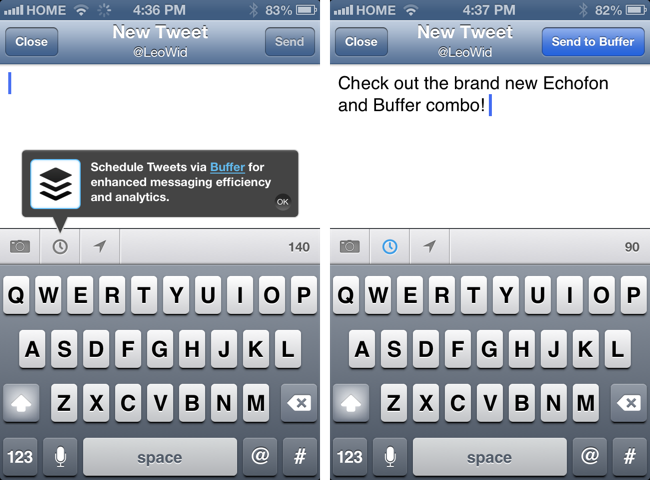
Buffer & Echofon Partner Up to Make Your Life Easier Posted: 15 Jul 2013 06:00 AM PDT There are countless tools online that you can use to make your life easier, especially if you are a social media professional. Every pro has his own particular favorite, but for those who have interacted with me, it is no secret that I love Buffer. What started out as a small startup – the founders even had problems with US visas in the beginning! – is now one of the most popular and most useful social media tools out there. For scheduling and spacing out tweets (and other social media posts) – Buffer is the way to go.  Now, Echofon has a little more on Buffer in terms of age, being one of the popular Twitter clients in existence. I use a different client for my needs, but Echofon certainly has more than its fair share of followers. Put together these two entities, and what do you have? A pretty neat experience for users. In a blog post published last week, Buffer co-founder Leo Widrich announced the partnership between Buffer and Echofon. If you’ve been using the scheduling tool for a while, you’ll know that they have cemented partnerships with other entities – Twitter clients, browsers, etc. – which is the logical thing to do. With this Buffer and Echofon hook up, though, more users are able to schedule their posts on the go. Echofon is available both for iOS and Android, and the new integration with Buffer is not limited to one platform; so, yay for everyone! If you’re an Echofon user, but you’ve never tried Buffer out, you really ought to give it a shot. You can thank me later. On the other hand, if you know what Buffer is all about but use another Twitter client, does this integration tempt you to switch to Echofon? I’m a Tweetbot fan, but I have to admit I am thinking of downloading Echofon… |
PS4 Can Alter Gaming Landscape, Sony Says Posted: 15 Jul 2013 05:00 AM PDT Okay, we all know by now that Sony's PlayStation 4 is likely to be a very big hit and probably outsell Microsoft's Xbox One, but there's no need to rub it in. Sony doesn't seem to have any intention of halting its "charm offensive": the new gaming platform's architect, Mark Cerny, recently said the upcoming PS4 has the potential to significantly alter the landscape of gaming. So how's that for raising the bar?  PS4 architect Mark Cerny says the next system can alter the landscape of gaming. And if that isn't enough, the PS4 is now touted to mark a renaissance of gaming, according to Cerny. The new system's lead architect also insisted that the console has the potential to have the highest variety of content and richness of material. Cerny talked about the flexibility of the new console and insisted that the next-generation system can give game developers and Sony more customization than a PC. He underlined that the PS4 will have an architecture that will be more accessible to independent game developers and make it easier for them to develop and self-publish their titles. Sony has already announced an impressive line-up of independently developed games for the new console, along with policies aimed at helping independent developers publish and promote their own titles, as part of the company's declared intention to focus more on consumers and developers. On their end, Microsoft officials say the Xbox One is the future of gaming and entertainment and will allow users to switch between experiences in a unique way, making the new system the best place to play games for many years to come. After backtracking on its DRM policies, the company has seen a marked increase in sales for its new consoles. It remains to be seen how the Microsoft-Sony competition will play out after gaming fans actually get the opportunity to try the two consoles for themselves. Both will feature at the GameStop Expo on August 28 in Las Vegas. Before that however, the PlayStation 4 and the Xbox One will be playable at Comic-Con in San Diego this weekend. The Xbox One will be released in November. Sony has yet to specify an exact date for the PlayStation 4 launch, but gave assurances that it will definitely happen before Christmas. PS4 architect Mark Cerny says the next system can alter the landscape of gaming. |
Bukito: The Fast, Travel-Friendly Portable 3D Printer Posted: 15 Jul 2013 04:00 AM PDT Most of the 3D printers currently on the market are bulky, hard to carry around and rather slow. So it's pretty hard to imagine one of these gadgets being able to continue printing upside down or in flight. But the Bukito, from Deezmaker, can do all this and more: this portable 3D printer is sturdy, fast, very light and affordable, making it a promising addition to the personal-use 3D printing market.  The Bukito portable 3D printer weighs only six pounds and has a printable area of 5 x 6 x 5 inches. The device is equipped with sturdy aluminum rails, which make for a very stable printing platform. Due to this fact, the device is able to continue printing even when carried around or turned upside down. Deezmaker president Diego Porqueras said the printer was specifically designed to be lightweight and stable and therefore appropriate for travel. The device will be ideal for classroom use and can be easily shared between teachers or students, he explained. Its rigid construction and the lightweight extruder system allow the printer to work significantly faster than other similar devices. The extruder system is also shorter than others, which gives extra speed and accuracy: the device is able to print at speeds of over 100mm per second. The extruder system's nozzle is made of metal, which allows the Bukito printer to work with many different types of materials without risking any damage to the nozzle. The printer uses 1.75mm filament and works with materials such as PLA, ABS and nylon. For the time being, the printer needs a power outlet to work, but developers are planning to release a battery-powered model as well after they secure the necessary funds for mass production. Bukito is currently on Kickstarter, where it has already exceeded its $50,000 goal and still has 20 days left of its crowdfunding campaign. Backers can get an unassembled Bukito kit for as little as $549 and will receive their order in February next year. There are several kits available for higher pledges, and backers who donate $799 will get their hands on a pre-assembled Bukito, ready for use anytime and anywhere. Check out the video below to see the Bukito portable 3D printer doing its job in flight and share your thoughts in the comments below: |
Hippflow: Now With Google Glass Support Posted: 15 Jul 2013 03:00 AM PDT Hippflow, which provides a service that makes it easy to update investors, mentors, team members and other stakeholders on a startup's progress and future plans, has now added support for Google Glass. The new Glass app brings Hippflow updates, which are pushed on the hour to Google's wearable tech, once a user has linked their Hippflow and Google Glass accounts. It may seem risky to build an app for Glass ahead of an iPhone or Android app, but Hippflow's young Russian founder Kirill Chekanov is excited by the opportunities that the new Google Glass has to offer.  First off, he notes that the Glass platform, in which 'cards' are used to display small snippets of information in a user's peripheral vision, means that it fits with Hippflow's status update M.O. and mission to cut down on email to and from a startup's investors and other stakeholders. A Hippflow milestone update and other types of startup updates work well within the confines of the Google Glass User Interface. Second, Chekanov says that a Glass app enables him to reach a defined group of target users (those in the Glass Explorer program) including some of Silicon Valley's most prominent investors, founders and other influential early adopters within the startup sphere. This is exactly the type of user that Hippflow has been designed for. "I want to thank Google," he says, also revealing that he and his team actually built the first Hippflow Glass prototype 'blind' since he does not have Google Glass! Instead, he had to rely on help from others in the developer community for access to the Glass API. Chekanov says, "I wanted to help the community to experience an absolutely different way to do things, a way to do it in one click, organically, just as you breathe." In this way, Hippflow's main competitor is email. Instead of a founder having to send out monthly or weekly email reports to investors and mentors to keep them updated on progress, problems and plans, or even things like major purchases, these updates can be posted on Hippflow and appear in the startup's timeline. Then, it’s various stakeholders can 'follow' the startup, and while most updates will invariably be marked as private, updates can also be public, providing a nice way of keeping early adopters or maybe crowdfunding backers in the loop. For investors, it's also a way to help their portfolio communications scale. "How do you track 10, 20, 50 companies? You need your data systematized," says Chekanov. "This is a key to success. You want it on the go, short, good-looking." We look forward to seeing the full applications of this new tech. |
Microsoft Hint Skype Calls Can Be Intercepted & Handed to The NSA
 Posted: 19 Jul 2013 06:00 AM PDT A recent statement by Microsoft on the National Security Agency (NSA), indirectly hints that any communication via Skype could be intercepted and given to the NSA. In a blog post the company said it “[assumes] that all calls, whether over the Internet or by fixed line or mobile phone, will offer similar levels of privacy and security.” In other words, Skype calls are no different to traditional phone calls made by a landline or cellphone. So the U.S goverment, through the PRISM program, can force Microsoft to hand over any Skype communication; something which they have always denied is technically possible. Privacy researcher Ashkan Soltani says “They’re implying that until they can say more, all they’re going to say is ‘don’t assume Skype is different.’" In a tweet, ACLU’s principal technologist and senior policy analyst Christopher Soghoian echoed Soltani’s thoughts: “Microsoft, a company with dozens of cryptographers, aims to offer same security and privacy for Internet calls as regular phones (aka none).” In 2008, Skype was owned by eBay and claimed that due to “peer-to-peer architecture and encryption techniques,” it was impossible for them to comply with wiretap requests. When Microsoft were asked to explain the sentence, a spokesperson said that when the company was last asked about that, it declined to comment and its position has not changed since. Documents leaked by Edward Snowden suggest that Microsoft has changed Skype’s architectuure making it possible to provide audio and video calls. In response to the allegations that they have actively helped the NSA and FBI, Microsoft released a long statement. “To be clear, we do not provide any government with the ability to break the encryption, nor do we provide the government with the encryption keys,” Smith wrote. “When we are legally obligated to comply with demands, we pull the specified content from our servers where it sits in an unencrypted state, and then we provide it to the government agency.” Microsoft has also sent a letter to the U.S Attorney General Eric Holder, requesting that he get involved and allow them to reveal more details on how it responds to government requests. They have made requests to the Depatment of Justice, the FBI and the Foreign Intelligence Surveillance Court (FISC) but so far the court has not responded to Microsoft’s requests. “We believe the U.S. Constitution guarantees our freedom to share more information,” reads Smith’s blog post. “The United States has been a role model by guaranteeing a Constitutional right to free speech. We want to exercise that right. With U.S. Government lawyers stopping us from sharing more information with the public, we need the Attorney General to uphold the Constitution.” |
Windows Phone 8 to Get Vine, Path & Flipboard Posted: 19 Jul 2013 05:00 AM PDT Windows users have a lot to look forward to these days. Not too long ago, Nokia unveiled its new high end phone the Lumia 1020, which has a ridiculously high resolution camera. While it probably won’t be the go-to phone of the average Windows Phone user, the device will certainly have its takers. Then there is the news of Surface RT price cuts. Those two things alone make it good times to be on the Windows side.  In any case, we are set to see Vine, Path, and Flipboard on Windows Phone 8 devices soon. I say soon, although news aggregator Flipboard has not revealed any info as to when the app will be ready. We do know, however, that Flipboard has a huge following on iOS and Android. As for Path, I used to hear about it more, and while it does have its fair share of users (not to mention funding), it does not seem to stand out as much. Still, they are more than alive, and they are working directly with Nokia to bring the app to Windows phones. In a blog post, the guys at Path highlighted their focus on the new supercamera Nokia phone, so this should be an interesting collaboration. Last, we have Vine, the relatively new kid on the block. Again, details about its arrival on Windows Phone 8 are not out, but the fact has been confirmed. In other news, Instagram is staying out of the fray, so perhaps, Vine will come out on top with this move. |
Intel Involved in Making Better 3D Movies Posted: 19 Jul 2013 04:00 AM PDT The Intel Corporation is tapping a new business opportunity in South Korea and it is not anything to do with supplying more mobile chips to Samsung Electronics Co. It is actually helping to make better three-dimensional movies. The Korean animation film market lacks the technological finesse of their Western counterparts, this explains why science fiction movies are not popular locally or form a part of the big, global Korean hits. But the global chip maker is testing the market, by providing its high-end processor chips and cloud computing technology to Dexter Studios to make Mr. Go, a new Korean movie that features a 3-D gorilla character named Ling Ling.  While computer graphics are used in a variety of areas, the data storage capacity needed to make detailed computer graphics like those used in natural disaster movies or Sci-Fi movies are enormous, experts say. "For the depiction of a realistic move of a big wave, each and every drop of water is drawn through detailed and complicated calculations of an equation," H.S. Lee, president of Intel Korea said during a news conference in Seoul recently. "The same goes for the movement of an animal’s fur." Dexter Digital, the film studio's CG unit, says Mr. Go's Ling Ling comes with 2 million to 3 million strands of fur. "Without the right hardware performance, it would have been impossible to make the movie," said Lee Yoon-suk, the planning and marketing director at Dexter Studios. The company used supercomputers that ran on Intel's Xeon E5 processors to make the film. The audience will get to decide for themselves now the movie has been released, if they find the baseball-playing, computer-generated gorilla endearing enough to make it a summer hit movie. The movie will be available in other Asian countries later this month. Intel Korea's Mr. Lee said the company plans to continue cooperating with Dexter Studios, noting that the CG business will develop into a key industry for South Korea in the future. |
Xbox One & PS4 Pre-Orders Double Previous Generations Posted: 19 Jul 2013 03:00 AM PDT For all the fuss about which next-generation console is better, both Xbox One & PS4 are actually selling like hot cakes. Last week Amazon ran out of launch bundles for both gaming systems and yesterday it was reported that pre-order numbers are already double those of previous generation consoles. According to the CEO of games publisher Ubisoft, Yves Guillemot, some retailers are reporting Xbox One and PlayStation 4 pre-order numbers that are double those of predecessors Xbox 360 and PlayStation 3. Guillemot did not name the retailers in question, but said they were all receiving more orders than before. 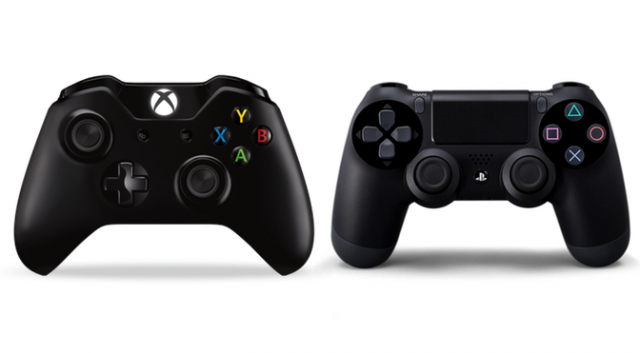 Both next-generation consoles are currently sold out at Best Buy and GameStop, while Amazon ran out of day-one editions last week. Amazon announced that standard editions were still available for pre-order, but without a clear delivery date. It is yet unclear whether the stock for both consoles' launch editions will be replenished. PS4 beating Xbox One? But even if both consoles are selling so well, it seems PlayStation 4 still has the edge, at least according to Amazon's best sellers chart. The PS4 Standard Edition was still in the top 5 best sold products in the video game category on Friday, while the same edition of the Xbox One is nowhere in sight in the top 20 category, although it is available for pre-order. It remains to be seen if this ranking will hold for long, but what's certain is that the PlayStation 4 has been a more popular choice with gamers so far. Gaming industry analysts say the more affordable price tag, its technical specs and the overall more favorable publicity since launch have gone a long way to helping Sony's new console secure a solid lead. Both Xbox One & PS4 will launch this holidays season. Microsoft will release the new console in 21 countries in November, for a retail price of $499 in North America. Sony has not officially revealed a launch date, but the new PlayStation will retail for $399. Have you already pre-ordered you next-generation console? Which one did you get and why? Let us know in the comments below. |
Facial Recognition Method Reads Vein Patterns Posted: 19 Jul 2013 02:00 AM PDT Facial recognition methods are generally regarded as a pretty reliable method of biometric identification, but if you've seen one too many Mission: Impossible episodes, you'll know that they are not by any means failproof. However, a new facial recognition method developed by researchers with India's Jadavpur University brings a unique take on traditional facial ID system: it can identify someone based on their face's blood vessel patterns.  Apparently vein patterns are as unique as one's fingerprint, but a lot tougher to duplicate, so security specialists have begun looking at ways of using these patterns for identification systems for a while now. Many palm and fingerprint scanners on the market are already able to analyze vein patterns, even from a distance, with the help of infrared technology. The same kind of technology was used by Indian scientists when developing their facial vein pattern identification system. By using a thermal imaging camera, the system performs an infrared scan of a person's face. The resulting image is then processed and analyzed by a computer, being run through a special algorithm that can detect all the veins and arteries, down to the smallest capillaries. The system has an impressive accuracy rate of 97% and according to scientists, it is virtually impossible to foil, unlike other biometric systems that are based on fingerprint or eye scanning. Fabricating a realistic mask that can accurately simulate another person's facial pattern is almost impossible. Moreover, no matter how good the mask is, the infrared camera would still detect the imposter's own blood vessel patterns, researchers explained. The impressive accuracy rate of this method makes it ideal for high-security systems. For the best results, scientists suggest using this method together with other forms of identification such as photo ID, PIN codes, security cards, etc. What do you think of this method of identification based on facial vein patterns? Is it as reliable as it sounds? |
Saturday, 6 July 2013
Google Refuse to Change Privacy Policy For Google Glass
Google Refuse to Change Privacy Policy For Google Glass Posted: 05 Jul 2013 07:00 AM PDT Google has said that it will not be changing the privacy policy for Google Glass. The company sent a letter to US Congressman Joe Barton on June 7 in response to an open letter that contained eight questions surrounding concerns about Google Glass. Barton, who is co-chair of the Bi-Partisan Privacy Caucus, said of the reply, “I am disappointed in the responses we received from Google. There were questions that were not adequately answered and some not answered at all.”  “When new technology like this is introduced that could change societal norms, I believe it is important that people’s rights be protected and vital that privacy is built into the device.” Google has again stated that it will ban facial recognition in response to the letter, however, developers claim that it is still possible to load facial recognition apps without Google’s permission. Some questions raised by the original open letter have not even been addressed by Google, and so it is not surprising that Barton’s concerns have not been allayed. For example, Google were asked to provide examples of when they would reject requests on Google Glass that would risk the privacy of others. Google have not provided those examples in the response letter. Keeping things simple and to the point, Google said, “Use of Google Glass will be governed by the terms of the Google Privacy Policy. No changes to the Google Privacy Policy are planned for Glass.” This isn’t the only open letter that Google have received on this issue. Representatives from ten international data protection agencies also wrote to Google. “Google Glass raises significant privacy issues and it is disappointing that Google has not engaged more meaningfully with data protection authorities about this technology,” says Canadian Privacy Commissioner Jennifer Stoddart. Google has defended itself by saying that there are measures in place to protect privacy. Users will have to give voice commands to activate the camera and the device will have social signals, alerting people to the fact that a recording is taking place. It will be possible to delete data and wipe the device remotely. CEO of Google, Larry Page, has urged people to wait and see whether issues arise Therefore we can take it that questions will not be answered fully, if at all, until Glass is finally released. |
IT Spending To Hit $3.7 Trillion Posted: 05 Jul 2013 06:00 AM PDT The IT services industry is on track to spend globally $3.7 trillion in 2013. Gartner, the analyst house publishing these numbers, projects spend for 2014 to rise to $3.9 trillion, up 4.1%. From devices through to data center investments and the services that run on them are the sources of this revenue. But that represents shrinking growth of only 2% on last year, as more expensive items like on-premise software and PCs continue to get forced out by less expensive, newer technology like lower-cost tablets and cloud service computing. It is important to note that these figures do not include the vast amounts of money that we as consumers spend online, via e-commerce and in apps etc; nor does it include services like advertising, which is often used to "pay" for content indirectly. “This may change in the future but at the moment it's excluded," Richard Gordon, managing vice president at Gartner has said.  Be that as it may, these figures, which do include global numbers on IT devices, provide a gauge for how and where the wider Information Technology world is growing. The $3.7 trillion in IT spend in 2013 represents a downward revision from where Gartner thought we would be today: compare to last quarter, when Gartner noted growth of 4.1% for this year; that is now more than halved and one of the main reasons for this is because of currency fluctuations. In constant currency, growth would still be down compared to 2012, but less so, to 3.5%. One of the bigger categories contributing to the lower forecasts comes from declines in IT devices, which Gartner has revised down to growing only 2.8% this year, or $695 billion, this is in comparison to a previous projection of 7.9%. This is directly linked to trends in what people are buying today for their computing needs: the time is up for bigger and more expensive PCs; and it’s the smaller, and often less expensive, tablet and smartphone time to shine. Gartner noted that although PCs are still the second-largest category of IT devices, the shipments of these are decreasing rapidly, while shipments for mobile phones and tablets continue to climb. In all, there will be 2.4 billion devices shipped in 2013 , an increase of 6% on last year, Gartner said. Analysts spell that out in revenue numbers that tablet revenue will grow by a mammoth 38.9% and mobile devices by 9.3%; but in PCs, "while new devices are set to hit the market in the second half of 2013, they will fail to compensate for the underlying weakness of the traditional PC market," Gartner notes. The biggest category of all has been and continues to be telecoms services, which includes things like broadband, telephone services and your mobile bills. These will rise to $1.7 trillion in 2013 — growth of only 0.9%, but at least reversing the declines of -0.7%in 2012. Enterprise software remains one of the smaller categories but growing the strongest: $304 billion will be spent on enterprise this year, a rise of 6.4%. IT services and data centers will each grow only around 2%. |
Meaningless to Compare Console Specs, Xbox Execs Say Posted: 05 Jul 2013 05:00 AM PDT Ever since the E3 show last month, we've all been caught up in a fierce debate about what next generation console is better and what features and specs would make it so. To all those who are still trying to work that out, Xbox executive Albert Penello says that comparing next-generation console specs is meaningless and that what actually matters is the games.  Penello also said that the discussion about which console is better, the Xbox One or the PlayStation 4, does not really matter. The same happened with previous generation consoles and this argument is pointless, because people debate things they don't actually know about, the Xbox executive said. His comment was a clear jab at Sony, whose PlayStation 4 was hailed by many fans and analysts as being a significantly more convenient and affordable option than the Xbox One. The greatest advantage Sony has is the price, as the PS4 will retail for $100 less than the Xbox One ($400 vs. $500). The two consoles will be officially released this fall, but so far only Microsoft announced an exact date. Gaming fans who can't wait until then to get their hands on the next-generation gaming platforms will get the chance to try them out at the GameStop Expo in Las Vegas on August 28. According to Penello, consumers will ultimately choose their next-generation consoles for the games it has, not for the technical specifications they see on paper. And in this respect, he added, Xbox developers feel that their console will be able to work some serious technical magic and offer an incredible gaming experience to fans. It's hard to disagree with Penello, but some gaming fans do look at the technical specs when purchasing their console. And we should also keep in mind that a great game requires equally great specifications to run smoothly. How important are the console specs to you when you're trying to decide what to buy? And just to add fuel to the fire, which of the two next-gen platforms has better technical specifications in your opinion? |
Microsoft Develop A Force Feedback 3D Touchscreen Posted: 05 Jul 2013 04:00 AM PDT Microsoft have published details on a force feedback 3D touchscreen project that allows you to feel and manipulate images. Researchers have combined an LCD flat panel screen, force sensors and a robotic arm that moves forwards and backwards. Microsoft say that by controlling the amount of resistance in a user’s fingertip, then they can simulate the shape and weight of things shown on the screen.  The screen can recreate the feel of an object’s shape by being moved backwards and forwards. When the prototype is touched, it responds by pushing back with a light force so that your fingers stay in contact with the screen. Then, by pressing against it, the robotic arm is programmed to instantly pull the screen backwards in a matching smooth movement. To create a 3D effect, size and perspective is automatically adjusted. “As your finger pushes on the touchscreen and the senses merge with stereo vision, if we do the convergence correctly and update the visuals constantly so that they correspond to your finger’s depth perception, this is enough for your brain to accept the virtual world as real,” said senior researcher Michael Pahud. Medical UsesMicrosoft have said that the device could be used for medical purposes as well as for gaming. They think it could be a useful tool in aiding doctors explore body scans.Using an MRI scan, they demonstrated how a medic could navigate through the various sections of the scan by pushing a finger against the display. It was also possible to draw notes and leave a “haptic detent” (or force-feedback marker) so that it was possible to find specfic layers again. “I could imagine receiving haptic feedback when you encountered an anomaly, such as a tumour, because we can change the response based on what you touch,” said Mr Pahud. “You can have different responses for when you touch soft tissue versus hard tissue, which makes for a very rich experience.” A Bit ArtificialAlthough Microsoft are making considerable progress with this device, some feel it is still not responsive enough to make it accurate. Dr Paul Weller, who is head of the Centre for Health Informatics at City University,London, said the screen would not be accurate enough for detecting texture.“If you were moving your finger over a surface that was rough the screen would have to go up and down very quickly to be able to give you that impression.” “I think their example of the brain scan is a bit artificial, but where I could see it being useful would be for a doctor doing teleconsultancy work,” he said. So while this 3D touchscreen needs some more work, it looks like we will see more of this type of technology in the future. |
Facebook to Try Games Publishing Posted: 05 Jul 2013 03:00 AM PDT Facebook is working with a number of small mobile game developers to undertake publishing by offering distribution through mobile ads in exchange for a percentage of revenue. Facebook confirmed it's working on tests for new mobile game distribution, but the company did not share any more details publicly.  The thinking is, that publishing is an old model that goes back to the world of console gaming, so it's a structure that is already well familiar for gaming studios. Consider this; In the console era, a big gaming company would market and distribute games from smaller studios that lacked the resources to promote their products. At the same time, smaller developers are having a hard time finding audiences when they are competing against bigger companies like King, Kabam and Supercell, which now have the power to spend tens of millions of dollars per annum on marketing. The initial costs of producing and distributing a competitive mobile game have gone from the hundreds of thousands into the millions of dollars mark for titles that have a place in the top-25 grossing spots. So in this experiment, Facebook is partnering with smaller companies and independent developers. They are also primarily focusing on distribution. They are not concentrating on editing games for content or financing their production, which is what other (larger) publishers sometimes do. On the developer side, some of the feedback apparently, is the typical skepticism that comes with the publishing model in general. Today, since mobile developers can simply "self-publish" just by putting their apps in the store, there's a longstanding debate about what value publishers can really add. When games are not successful, neither the developer or the publisher make money. But when games are hits like with the original Angry Birds, originally published by chillingo, there can be cause for concern when the original developer questions why they are paying a massive revenue share to another party. They can also go down other routes by releasing games that are similar to the original and coercing users to the new version of the game, where they won't have to pay the original publisher. While advertising has always been the mainstay of Facebook's model on desktop PCs and mobile devices alike, there are many revenue possibilities on mobile devices that the company has yet to fully explore. Facebook may feel that it is not fully realizing the potential of the mobile app economy. Through mobile advertising, the company basically turned on a $1.5 billion-a-year business in about six months. Facebook has been earning a little over $200 million per quarter from payments and other fees, most of that revenue coming from virtual currency transactions from inside games. Facebook does also earn a large amount of revenue from mobile game developers through normal mobile advertising buying. But it hasn't been able to replicate that business on mobile devices, because Google and Apple both control the market’s two major smartphone app stores. |
NeverWet Waterproofs Almost Any Surface Posted: 05 Jul 2013 02:00 AM PDT What if you never had to worry about spilling your coffee and totally ruining your brand new outfit you bought with some hard-earned loads of cash? Or that you'd spill some red wine on your favorite couch and leave a big ugly stain there for all eternity? With NeverWet, from Ross Nanotechnology and Rust-Oleum, you really will not have to worry about these things anymore, as this amazing spray kit can waterproof virtually anything and everything you own.  How does it work? The NeverWet kit consists of two spray cans: one of them creates a base coat and the other a top coat. It's an easy process that only requires the user to apply the two sprays, waiting a little to allow the coating to get dry and then, your sprayed objects will be completely water-repellant. The product is designed to be used on various surfaces and fabrics and it actually creates a superhydrophobic barrier on them, which will repel water and other liquids. Unlike with most waterproofing substances, which only prevent the liquid from permeating the surface, the NeverWet actually forms beads that roll off the waterproofed surface. This is due to the fact that the silicon-based coating creates a 165 degree contact angle when applied, which creates what is known as the Lotus effect. Rust-Oleum has released several marketing videos showing how NeverWet interacts with multiple surfaces. The videos show how a pair of sneakers and shirt treated with the product repel chocolate spread or how a cardboard box turns into a do-it-yourself ice box after being sprayed. Manufacturers say they have tested the NeverWet with almost any surface and against many different kinds of liquid and the product always worked. Apparently it works best on wood, metal, aluminum, concrete and most types of plastic. And although the videos show how NeverWet works to waterproof a shirt and even an iPhone, developers advise against using the product on clothes and electronics for the time being. The NeverWet kit is available at the Home Depot for $20. What do you think of this awesome product, would you give it a try? |


| |||
Friday, 5 July 2013
Ben 10 Highway Skateboarding

Ben 10 Highway Skateboarding
| |||

| Previous | Next |
Ben 10 Free Online Games Cartoon Network

| |||
| Previous | Next |
Subscribe to:
Posts (Atom)