| |||


| Previous | Next |
| |||
| Previous | Next |
| |||
| Previous | Next |
| |||
| Previous | Next |
| |||
| Previous | Next |
 Posted: 10 Jul 2013 07:00 AM PDT In view of endless debate over Windows 8 and the confusion because of its new features, Windows took a little while to come back with a worthy answer. With its newer version, Windows 8.1, it has few things to present to its critics. Windows 8.1 Carries New FeaturesThe Return of the Windows Start Button While this feature was always a part of Windows since its beginning, no one liked the idea of Windows 8 not having this feature. The Windows button in Windows 8 only looks different and has touch capability, but it can be accessed when you press the Windows key on your keyboard. Users did not like this, and so, Windows has placed the button where it is more visible. It’s believed that users will like this for more than one reason. They’ll know it’s there because they can see it, and they will also have the option of using the touch screen option. Windows Also Introduced the Hands-Free Mode Windows has created a brilliant array of apps that has pleased most users. It has even created recipe apps that collect recipes from top chefs so that you can learn how to cook great meals. However, how would you read through the recipes and flip pages when your hands are full of cooking materials? Well, you don’t have to touch your screen with Windows 8.1 if you have your web cam on. All you need to do is wave your hand over your page on screen, and the page will turn. Your web-cam will pass on the signal via the Hands-free app. Universal Search Previously, the ‘search’ option on the right side of your screen always existed, but it was never quite visible. Now you can do so much more with it because it is Universal, and allows you to search Bing as well as your folders, applications, and files, in one box. You Now Have Updated and New Apps Similar to the smartphone and the tablet, Windows 8 and 8.1 both have apps. These apps are quite different from the regular ones you come across, and they are available through your touch-screen. Microsoft has offered you the ability to use your computer as a tablet because these items are available on your touch-screen. Windows deserves much credit for designing them, and they are all highly useful. To name a few, there is a scientific calculator, a Health and Fitness application that can monitors your exercise and diet, a Reading List, where you can save your reading material and updates for current apps. Windows Now Gives You 3-D Printer Support Microsoft claims Windows 8.1 is the first operating system that functions smoothly with desktop 3-D printers such as the Solidoodle and Makerbot. These 3-D printers will use an API and a driver, similar to that of a 2-D printer. All these new features have been pleasing Windows lately, and Windows seems to be getting things right. All the criticism that they faced in recent months will lose its intensity with each user trying out 8.1 |
Jelly Bean Overtakes Gingerbread Posted: 10 Jul 2013 06:00 AM PDT Jelly Bean is now used on just under 38% of all active Android devices. The latest figures show which versions of Android are actually being used in the real world, have been published by Google. This new data shows that Android 4.x, which includes Ice Cream Sandwich and Jelly bean, runs on over 61% of devices, while Jelly Bean itself (Android 4.1 and Android 4.2) runs on just under 38% of devices.  This is the first time that Jelly Bean has taken the lead from the Gingerbread operating system, which has stayed active even though it has been superseded several times. However, Gingerbread's use is in decline, at the beginning of this year Android 2.3 was running on just under half of all active Android devices and Jelly Bean had just a 10% share. Ice Cream Sandwich was popular with just under 30% usage. If we skip forward six months in time, now Jelly Bean is king having taken the lion share from Gingerbread and Ice Cream Sandwich. Google generates these numbers based on "data collected during a 14-day period ending on July 8, 2013″ and use Google's new counting method. Since April 2013, the data now contains the number of devices that are used to visit the Google Play Store, rather than any device that simply checked-in to Google servers. Google have said that this is a more accurate way to count the users who are actually active in the Android sphere. As for the rest of the field Android 2.1 and 2.2 are still used on 4.5 % of devices while Android 1.6 Donut and Android 3.2 Honeycomb barely register at less than 1% (0.1%). The reason for Gingerbread's longevity is likely because of its low system requirements. It is still possible to buy low end Smartphones running Gingerbread today. Since it can run on devices with only 256MB of memory and it doesn't need a very fast GPU then for emerging markets it is still a very viable option. How long it will remain that way is unclear, however the fact that Jelly Bean has finally taken the lead coupled with Android 4.x runs on over 61% of active devices, it seems that the end is almost upon Gingerbread…Ah well, it had a good run. . |
Dell to Enter The Wearable Computing Niche? Posted: 10 Jul 2013 05:00 AM PDT With the availability of Google Glass to the general public coming closer and closer, the interest in wearable computing has never been this strong. Of course, the concept has always been a topic of interest for forward thinkers, and it is also a bone of content for those who see a lot of potential danger. But, as much as some people may have closed their minds to the concept, wearable computing is the future of gadgets. And if the whispers about tech icon Dell are anything to go by, the wearable computing niche is really something to look into.  Add to that the shrinking PC market, and it is only understandable that the brains running Dell are looking at other options. If they want to continue being a top brand, that is. I do not know a single soul who gets excited when Dell is mentioned, but that does not mean the company may not have anything to add to the game. They might not be as far as Google Glass yet, but Sam Burd, VP of personal computing at Dell, has said that they are “exploring ideas in that [wearable computing] space”. He went as far as to say that wearing a watch on your wrist is “pretty interesting, pretty appealing”. Of course, we assume that he was referring to the likes of the Pebble and Cookoo watches. Still, this does not mean that Dell is totally going to abandon the PC. Burd stated this rather clearly in spite of the abysmal financial returns his department has had. Will Dell be able to make waves – even mere splashes – in the wearable computing niche? |
Mozilla’s Smartphone OS Launches in Spain Posted: 10 Jul 2013 04:00 AM PDT One of the world's leading Internet browser providers has joined the smartphone business with a new operating system. Mozilla's smartphone OS was officially released in Spain. First details about the operating system emerged at the Barcelona Mobile World Congress in February and Mozilla has just released the first two smartphones equipped with the new Firefox operating system.  The two smartphones, a ZTE Open and an Alcatel OneTouch Fire, are only available in Spain for the time being. Mozilla partnered with Telefonica on the project, which aims at making available a series of more affordable smartphones to the general public. The phones will retail for 69 euros or about $90. Pre-paid versions also come with 30 euros worth of credit. Both models will be equipped with standard smartphone features such as phone calls, text messaging, email, maps, camera and Firefox web browsing. Each of the phones has 512MB internal memory and is provided with a microSD card slot to increase storage space. The smartphones do not feature HD screens, but are equipped with 1 GHz Qualcomm processors and Ardeno 200 graphics cards. The Firefox OS is open source and developed using HTML5, which Mozilla hopes will appeal to web developers who can easily use the system to create their own apps. It is not yet known when the Mozilla OS smartphones will be available for U.S. consumers. For the time being, Mozilla is marketing the phones on emerging markets such as Poland, Spain, Colombia, Venezuela and Brazil, markets where the new OS will be a significantly more affordable option than the more expensive iPhones or last generation Android powered devices. Mozilla executives acknowledge that it will be difficult for the Firefox OS to find success on a market that is 90% dominated by Android and iOS together, but are confident that the low price point and open-source features will make it a popular choice among those loking for an alternative to traditional smartphone operating systems. What do you think are Mozilla's chances to succeed? Would you like to try out a Firefox OS smartphone? |
Wood Battery for Large-Scale Energy Storage Posted: 10 Jul 2013 03:00 AM PDT While traditional batteries cater to most of our everyday energy storage needs, they are generally not a feasible solution for large-scale energy storage, both in terms of cost and environmental sustainability. So how about using a wood battery instead? As strange as it may sound, scientists are researching a battery model that uses wood fibers coated in tin and believe that this could be an efficient and environmentally friendly solution for large-scale storage.  Cellulose fibers were found to help nanobatteries keep their structure One of the biggest obstacles to developing stable sodium-ion batteries so far has been the fact that they have a very short life due to a phenomenon known as sodiation. More specifically, every charge and discharge of ions leads to the anode swelling and the battery falling apart after as little as 20 charging cycles. But by using wood fibers, Maryland University scientists have managed to create longer lasting nanobatteries. The paper-thin wood fibers were coated with carbon nanotubes to become electrically conductive and then wrapped the array with a tin film. Given that wood fibers are softer than the stiff bases generally used in traditional batteries, they were able to withstand the sodiation process and the anode's repeated swelling and shrinking. The wood nanobattery was thus able to survive over 400 charging cycles. Even at the end of the battery life, the wood fibers were wrinkled, but still intact. Scientists found inspiration for the project in the trees. A tree's wood fibers hold water rich in minerals, which makes them ideal for the storage of liquid electrolytes and this makes them an active part of the battery, not only the base. The wood battery is still in development. Sodium generally does not store energy as efficient as lithium, so it's unlikely to see the technology used in our everyday gadgets. But a sodium-ion battery's cycling performance, cheap raw material and impressive capacity will make it a highly efficient solution for storing large amounts of energy from renewable sources. What do you think of the new design? Could the sodium-ion battery hold the key for solving a possible energy crisis, by offering large-scale energy storage to virtually every community with zero environmental impact? [Image via treehugger] The post Wood Battery for Large-Scale Energy Storage appeared first on TechBeat. |
Google Pays Out to AdBlock Plus Posted: 10 Jul 2013 02:00 AM PDT Adblock Plus is a popular plugin for filtering advertisements, but it won’t hide Google ads by default. That’s because the company pays for inclusion in a whitelist. If you have ever wanted to keep annoying, intrusive advertisements off of your computer screen? Then you have probably installed Adblock Plus, a freeware product that has been downloaded by millions of users. What you probably did not know, however, is that Adblock Plus is not as indiscriminate as you would think; though the program hides a number of advertisements by default, advertising monoliths like Google can and do pay Eyeo, the company running Adblock Plus, to keep their advertisements on the company's Acceptable Advertisements whitelist. By default then, Adblock Plus does indeed display adverts from those who pay and are visible when Adblock is enabled!  “Scandalous!” I hear you cry! But the policy is not exactly new. Eyeo have implemented the Acceptable Ads white list two years ago, back in 2011, partly to prevent the depriving of small websites of valuable advertising revenue. The move was also pragmatic: as per the Frequently Asked Questions section on the Abdblock Plus website. Managing a portfolio of white listed advertisements can be expensive and so charging larger companies to participate keeps the Acceptable Ads initiative viable. The inclusion of a white list in ad blocking software may seem insincere, but Eyeo co-founder Till Faida thinks of it as a way to promote positive change in the online advertising sphere. In a recent interview, Faida suggests the company's philosophy is more about reaching a compromise between internet users and advertisers than shutting advertisers out completely. Less in your face ads are a start, apparently: the Acceptable Ads policy mandates that advertisements be nonintrusive. Considering a number of points; the number of small internet publishers that rely solely on ads for income, and the services companies like Google, provide at no charge, Eyeo's policies looks reasonable. Adblock Plus' current approach allows legitimate advertisements while discouraging harmful ones and in doing so helps. A greater transparency in these matters is necessary, granted, knowing exactly how much Eyeo charges certain advertisers would be a wonderfully clear beginning, but the balance that Eyeo has struck between internet users and advertising companies is sound. |
Google Refuse to Change Privacy Policy For Google Glass Posted: 05 Jul 2013 07:00 AM PDT Google has said that it will not be changing the privacy policy for Google Glass. The company sent a letter to US Congressman Joe Barton on June 7 in response to an open letter that contained eight questions surrounding concerns about Google Glass. Barton, who is co-chair of the Bi-Partisan Privacy Caucus, said of the reply, “I am disappointed in the responses we received from Google. There were questions that were not adequately answered and some not answered at all.”  “When new technology like this is introduced that could change societal norms, I believe it is important that people’s rights be protected and vital that privacy is built into the device.” Google has again stated that it will ban facial recognition in response to the letter, however, developers claim that it is still possible to load facial recognition apps without Google’s permission. Some questions raised by the original open letter have not even been addressed by Google, and so it is not surprising that Barton’s concerns have not been allayed. For example, Google were asked to provide examples of when they would reject requests on Google Glass that would risk the privacy of others. Google have not provided those examples in the response letter. Keeping things simple and to the point, Google said, “Use of Google Glass will be governed by the terms of the Google Privacy Policy. No changes to the Google Privacy Policy are planned for Glass.” This isn’t the only open letter that Google have received on this issue. Representatives from ten international data protection agencies also wrote to Google. “Google Glass raises significant privacy issues and it is disappointing that Google has not engaged more meaningfully with data protection authorities about this technology,” says Canadian Privacy Commissioner Jennifer Stoddart. Google has defended itself by saying that there are measures in place to protect privacy. Users will have to give voice commands to activate the camera and the device will have social signals, alerting people to the fact that a recording is taking place. It will be possible to delete data and wipe the device remotely. CEO of Google, Larry Page, has urged people to wait and see whether issues arise Therefore we can take it that questions will not be answered fully, if at all, until Glass is finally released. |
IT Spending To Hit $3.7 Trillion Posted: 05 Jul 2013 06:00 AM PDT The IT services industry is on track to spend globally $3.7 trillion in 2013. Gartner, the analyst house publishing these numbers, projects spend for 2014 to rise to $3.9 trillion, up 4.1%. From devices through to data center investments and the services that run on them are the sources of this revenue. But that represents shrinking growth of only 2% on last year, as more expensive items like on-premise software and PCs continue to get forced out by less expensive, newer technology like lower-cost tablets and cloud service computing. It is important to note that these figures do not include the vast amounts of money that we as consumers spend online, via e-commerce and in apps etc; nor does it include services like advertising, which is often used to "pay" for content indirectly. “This may change in the future but at the moment it's excluded," Richard Gordon, managing vice president at Gartner has said.  Be that as it may, these figures, which do include global numbers on IT devices, provide a gauge for how and where the wider Information Technology world is growing. The $3.7 trillion in IT spend in 2013 represents a downward revision from where Gartner thought we would be today: compare to last quarter, when Gartner noted growth of 4.1% for this year; that is now more than halved and one of the main reasons for this is because of currency fluctuations. In constant currency, growth would still be down compared to 2012, but less so, to 3.5%. One of the bigger categories contributing to the lower forecasts comes from declines in IT devices, which Gartner has revised down to growing only 2.8% this year, or $695 billion, this is in comparison to a previous projection of 7.9%. This is directly linked to trends in what people are buying today for their computing needs: the time is up for bigger and more expensive PCs; and it’s the smaller, and often less expensive, tablet and smartphone time to shine. Gartner noted that although PCs are still the second-largest category of IT devices, the shipments of these are decreasing rapidly, while shipments for mobile phones and tablets continue to climb. In all, there will be 2.4 billion devices shipped in 2013 , an increase of 6% on last year, Gartner said. Analysts spell that out in revenue numbers that tablet revenue will grow by a mammoth 38.9% and mobile devices by 9.3%; but in PCs, "while new devices are set to hit the market in the second half of 2013, they will fail to compensate for the underlying weakness of the traditional PC market," Gartner notes. The biggest category of all has been and continues to be telecoms services, which includes things like broadband, telephone services and your mobile bills. These will rise to $1.7 trillion in 2013 — growth of only 0.9%, but at least reversing the declines of -0.7%in 2012. Enterprise software remains one of the smaller categories but growing the strongest: $304 billion will be spent on enterprise this year, a rise of 6.4%. IT services and data centers will each grow only around 2%. |
Meaningless to Compare Console Specs, Xbox Execs Say Posted: 05 Jul 2013 05:00 AM PDT Ever since the E3 show last month, we've all been caught up in a fierce debate about what next generation console is better and what features and specs would make it so. To all those who are still trying to work that out, Xbox executive Albert Penello says that comparing next-generation console specs is meaningless and that what actually matters is the games.  Penello also said that the discussion about which console is better, the Xbox One or the PlayStation 4, does not really matter. The same happened with previous generation consoles and this argument is pointless, because people debate things they don't actually know about, the Xbox executive said. His comment was a clear jab at Sony, whose PlayStation 4 was hailed by many fans and analysts as being a significantly more convenient and affordable option than the Xbox One. The greatest advantage Sony has is the price, as the PS4 will retail for $100 less than the Xbox One ($400 vs. $500). The two consoles will be officially released this fall, but so far only Microsoft announced an exact date. Gaming fans who can't wait until then to get their hands on the next-generation gaming platforms will get the chance to try them out at the GameStop Expo in Las Vegas on August 28. According to Penello, consumers will ultimately choose their next-generation consoles for the games it has, not for the technical specifications they see on paper. And in this respect, he added, Xbox developers feel that their console will be able to work some serious technical magic and offer an incredible gaming experience to fans. It's hard to disagree with Penello, but some gaming fans do look at the technical specs when purchasing their console. And we should also keep in mind that a great game requires equally great specifications to run smoothly. How important are the console specs to you when you're trying to decide what to buy? And just to add fuel to the fire, which of the two next-gen platforms has better technical specifications in your opinion? |
Microsoft Develop A Force Feedback 3D Touchscreen Posted: 05 Jul 2013 04:00 AM PDT Microsoft have published details on a force feedback 3D touchscreen project that allows you to feel and manipulate images. Researchers have combined an LCD flat panel screen, force sensors and a robotic arm that moves forwards and backwards. Microsoft say that by controlling the amount of resistance in a user’s fingertip, then they can simulate the shape and weight of things shown on the screen.  The screen can recreate the feel of an object’s shape by being moved backwards and forwards. When the prototype is touched, it responds by pushing back with a light force so that your fingers stay in contact with the screen. Then, by pressing against it, the robotic arm is programmed to instantly pull the screen backwards in a matching smooth movement. To create a 3D effect, size and perspective is automatically adjusted. “As your finger pushes on the touchscreen and the senses merge with stereo vision, if we do the convergence correctly and update the visuals constantly so that they correspond to your finger’s depth perception, this is enough for your brain to accept the virtual world as real,” said senior researcher Michael Pahud. Medical UsesMicrosoft have said that the device could be used for medical purposes as well as for gaming. They think it could be a useful tool in aiding doctors explore body scans.Using an MRI scan, they demonstrated how a medic could navigate through the various sections of the scan by pushing a finger against the display. It was also possible to draw notes and leave a “haptic detent” (or force-feedback marker) so that it was possible to find specfic layers again. “I could imagine receiving haptic feedback when you encountered an anomaly, such as a tumour, because we can change the response based on what you touch,” said Mr Pahud. “You can have different responses for when you touch soft tissue versus hard tissue, which makes for a very rich experience.” A Bit ArtificialAlthough Microsoft are making considerable progress with this device, some feel it is still not responsive enough to make it accurate. Dr Paul Weller, who is head of the Centre for Health Informatics at City University,London, said the screen would not be accurate enough for detecting texture.“If you were moving your finger over a surface that was rough the screen would have to go up and down very quickly to be able to give you that impression.” “I think their example of the brain scan is a bit artificial, but where I could see it being useful would be for a doctor doing teleconsultancy work,” he said. So while this 3D touchscreen needs some more work, it looks like we will see more of this type of technology in the future. |
Facebook to Try Games Publishing Posted: 05 Jul 2013 03:00 AM PDT Facebook is working with a number of small mobile game developers to undertake publishing by offering distribution through mobile ads in exchange for a percentage of revenue. Facebook confirmed it's working on tests for new mobile game distribution, but the company did not share any more details publicly.  The thinking is, that publishing is an old model that goes back to the world of console gaming, so it's a structure that is already well familiar for gaming studios. Consider this; In the console era, a big gaming company would market and distribute games from smaller studios that lacked the resources to promote their products. At the same time, smaller developers are having a hard time finding audiences when they are competing against bigger companies like King, Kabam and Supercell, which now have the power to spend tens of millions of dollars per annum on marketing. The initial costs of producing and distributing a competitive mobile game have gone from the hundreds of thousands into the millions of dollars mark for titles that have a place in the top-25 grossing spots. So in this experiment, Facebook is partnering with smaller companies and independent developers. They are also primarily focusing on distribution. They are not concentrating on editing games for content or financing their production, which is what other (larger) publishers sometimes do. On the developer side, some of the feedback apparently, is the typical skepticism that comes with the publishing model in general. Today, since mobile developers can simply "self-publish" just by putting their apps in the store, there's a longstanding debate about what value publishers can really add. When games are not successful, neither the developer or the publisher make money. But when games are hits like with the original Angry Birds, originally published by chillingo, there can be cause for concern when the original developer questions why they are paying a massive revenue share to another party. They can also go down other routes by releasing games that are similar to the original and coercing users to the new version of the game, where they won't have to pay the original publisher. While advertising has always been the mainstay of Facebook's model on desktop PCs and mobile devices alike, there are many revenue possibilities on mobile devices that the company has yet to fully explore. Facebook may feel that it is not fully realizing the potential of the mobile app economy. Through mobile advertising, the company basically turned on a $1.5 billion-a-year business in about six months. Facebook has been earning a little over $200 million per quarter from payments and other fees, most of that revenue coming from virtual currency transactions from inside games. Facebook does also earn a large amount of revenue from mobile game developers through normal mobile advertising buying. But it hasn't been able to replicate that business on mobile devices, because Google and Apple both control the market’s two major smartphone app stores. |
NeverWet Waterproofs Almost Any Surface Posted: 05 Jul 2013 02:00 AM PDT What if you never had to worry about spilling your coffee and totally ruining your brand new outfit you bought with some hard-earned loads of cash? Or that you'd spill some red wine on your favorite couch and leave a big ugly stain there for all eternity? With NeverWet, from Ross Nanotechnology and Rust-Oleum, you really will not have to worry about these things anymore, as this amazing spray kit can waterproof virtually anything and everything you own.  How does it work? The NeverWet kit consists of two spray cans: one of them creates a base coat and the other a top coat. It's an easy process that only requires the user to apply the two sprays, waiting a little to allow the coating to get dry and then, your sprayed objects will be completely water-repellant. The product is designed to be used on various surfaces and fabrics and it actually creates a superhydrophobic barrier on them, which will repel water and other liquids. Unlike with most waterproofing substances, which only prevent the liquid from permeating the surface, the NeverWet actually forms beads that roll off the waterproofed surface. This is due to the fact that the silicon-based coating creates a 165 degree contact angle when applied, which creates what is known as the Lotus effect. Rust-Oleum has released several marketing videos showing how NeverWet interacts with multiple surfaces. The videos show how a pair of sneakers and shirt treated with the product repel chocolate spread or how a cardboard box turns into a do-it-yourself ice box after being sprayed. Manufacturers say they have tested the NeverWet with almost any surface and against many different kinds of liquid and the product always worked. Apparently it works best on wood, metal, aluminum, concrete and most types of plastic. And although the videos show how NeverWet works to waterproof a shirt and even an iPhone, developers advise against using the product on clothes and electronics for the time being. The NeverWet kit is available at the Home Depot for $20. What do you think of this awesome product, would you give it a try? |
| |||
The Telescopic Contact Lens That Lets You See Like The Terminator Posted: 04 Jul 2013 07:00 AM PDT Have you ever wished you had vision that could zoom in and out, like the Terminator? Well maybe soon you can. A team is working on a new telescopic contact lens that is just over a millimeter thick. The lens is surrounded by a ring of movable components that magnify view by 2.8 times. As of yet, it is not able to compute the facial structure of what is being looked at but liquid crystal shutters allow the wearer to switch between normal and magnified vision.  The contact lens was developed at the Swiss Federal Institute of Technology (EPFL) in Lausanne, Switzerland and at the University of California, San Diego by Eric Tremblay and his colleagues. The research and developement for the project has been funded by DARPA. So far the team has integrated the LCD shutter mechanism into a pair of modified Samsung 3D TV glasses. The lens has been tested on an optomechanical model of the human eye and it is hoped that it won’t be too long before the LCD technology can be embedded directly into the lens itself, doing away with the 3D glasses. According to New Scientist, the researches have said "Although the magnified images were clearly visible in our tests, acuity fell short of the design specification.” The team believe that if they can improve the refractive optics, then any diffraction related problems will be solved. So while we await this interesting piece of techology, we will just have to make do with normal specs and cheesy Arnie impressions! |
Opera 15 Browser Launched For Mac And PC Posted: 04 Jul 2013 06:00 AM PDT Opera 15 Chromium is officially launched as of 2nd July. While the non-final build of Opera’s new browser for PC and Mac was simply called “Next,” the company have now chosen the more fitting title of “Opera 15″ for its official release. There aren’t any features of note that we hadn’t seen in the desktop preview of the WebKit-based software, but, for information purposes we note that it sports a Discover feature for catching up on the latest news with a fresh design, and a tweaked Speed Dial menu for quick access to your favourite websites on the internet.  Also, the web-clipping Stash feature, predictive address/search bar, a new download manager and “Off-Road mode” for extra compression with bad connections, are all now included in the finalised version. However, we need to point out a few clear and evident flaws with this new offering. The Opera Link synchronisation support has not been included yet and the Opera Mail client is not an installed feature any longer and must be downloaded separately. The browser now is not very customisable at all, e.g. there is no personalisation of the toolbar buttons? You are not able to widen the bar to show page thumbnails and you are not able to move the tab strip. The browser has been tested by SunSpider benchmark on the Mac build of Opera 15 Chromium, in which it scored 167ms, in comparison with Google Chrome which came in with 171ms. If you are not happy with your current choice of web browser, whether it be Internet explorer, Safari, Google Chrome or some other browser, then why not give Opera 15 a try and see if it’s ok to roll with for a while? |
More Details on Foxconn iPhone-Compatible Smart watch Posted: 04 Jul 2013 05:00 AM PDT With news about Apple applying for the iWatch trademark in Japan spreading like wildfire, supporters of the company and its products are certainly trying not to get overly excited about the possibility of a smartwatch in the future. Of course, we all know that a whole lot can happen in between applying for the trademark (and only in certain countries) and a product actually getting to market. 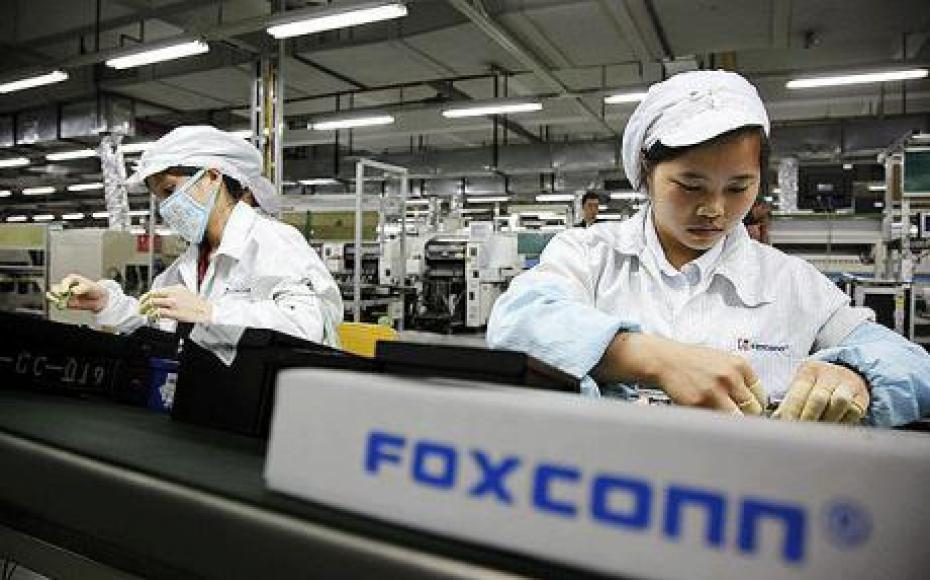 Foxconn is the name known the world over, but it is officially known as Hon Hai Precision Industry, and it has jumped the gun in releasing an iPhone-compatible smartwatch. It sure is not the first one to do so, but it might very well be one of the closest companies to Apple to do so. 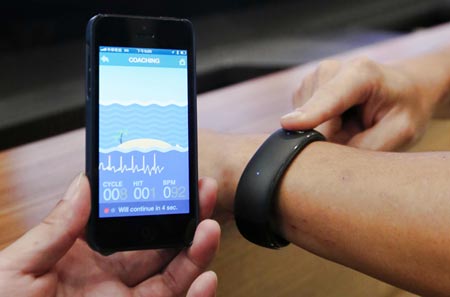 We know that Foxconn has not been without struggles in the past months, and releasing its own iPhone-compatible smartwatch might be a way to keep its head above the water. What can this gizmo do? Obviously, it can be hooked up to your iPhone and it can give you information such as:
What do you think about Foxconn’s wearable gadget? |
Precursor Games Founder Faces Child Porn Charges Posted: 04 Jul 2013 04:00 AM PDT Things are pretty rough for Canadian game developers Precursor Games. After two failed crowdfunding campaigns for what is intended to be their first big game, the company has suffered quite an image blow after one of its founding members was arrested. Precursor Games founder Kenneth McCulloch was taken into custody last week on child pornography charges and is pending bail. The gaming company immediately moved to sever ties with McCulloch, announcing that he was no longer affiliated with Precursor Games in any way.  McCulloch, 42, was arrested by the Niagara police on June 27 after detectives searched his residence at St. Catharines, Ontario. During the search, detectives seized what was described as a significant number of computers and peripheral devices. A Niagara police release said McCulloch was charged with possession of, making available and accessing child pornography. The Precursor Games employee had been under investigation since April, and the inquiry is ongoing, police said. No other details have been released about the case at this point. Precursor Games reacted to the news by immediately pulling down McCulloch's profile from their website. The company's CEO Paul Caporicci also said on the Precursor Games forums that the developer was no longer affiliated with the company, given the serious nature of the disturbing charges against him. Besides being founder of Precursor Games, McCulloch was a veteran Silicon Knights employee, having worked with the gameing company for 20 years before leaving with most of his colleagues to set up Precursor. The small studio is currently working on developing a "spiritual successor" to Silicon Knights' successful game Eternal Darkness: Sanity’s Requiem. The fate of the sequel, called Shadow of the Eternals, is currently unclear, given that the company failed in securing the necessary funds to move forward with it. Precursor Games launched two crowdfunding campaigns to raise the $1.5 million needed to create the first episode of the game, but both campaigns were put on hold in June. The company promised to relaunch its effort later, saying that the reason for the break was to obtain enough time to integrate some exciting opportunities" in the game's development. It's unclear when and if the crowdfunding campaigns will be resumed, and now, with McCulloch's arrest, it's even less likely that the company will manage to hit its funding goal. |
Galaxy Note 3 Rumors Posted: 04 Jul 2013 03:00 AM PDT For those of you who love all things Samsung; get ready, there may be a new Galaxy Note 3 just around the corner. A new rumour has surfaced claiming that the latest phablet device could be arriving in September. The Korean tech giant has certainly hyped up the new Samsung Galaxy S4 smartphone but many think it’s time that the Galaxy Note is also ready for an overhaul. According to sources close to the technology blog Android Geeks, a Note 3 model is in the pipeline.  Will the new Galaxy Note have a bigger screen than its previous model? So it could be possible that the Note 3 carries on the tradition of ever increasing size, maybe offering a 5.7,5.8 or even 6-inch display. It is also likely that the camera will be upgraded from an 8-megapixel to a much better 13-megapixel, like the Galaxy S4. We’d like to hear your thoughts on whether you think a possible 6-inch screen is just too big. When does a phablet cross over into the realm of tablet? |
X-Ray Vision On Your Smartphone: It May Be Possible Posted: 04 Jul 2013 02:00 AM PDT X-ray Vision: The Future Of Smartphones? Dina Katabi, a professor in MIT's Department of Electrical Engineering and Computer Science, and graduate student Fadel Adib, used low-power Wi-Fi signals to track human movement behind walls. These researchers have created a new system that could be used in future electronic devices to potentially give people X-ray vision.  The system is radically different from previous efforts, which have used expensive radar technology. Dina Katabi's system, known as Wi-Vi,(Wi-Fi and Vision) transmits a low-power Wi-Fi signal that reflects off of people and can therefore be used to locate and track them. Katabi said in a press release; "We wanted to create a device that is low-power, portable and simple enough for anyone to use, to give people the ability to see through walls and closed doors…We had to come up with a technology that could cancel out all these other reflections, and keep only those from the moving human body." The newly designed system uses two antennas to transmit the signal and a single receiver to read the waves that return. The signal from the second antenna is the inverse signal of the first one, allowing the two signals to interfere with each other and cancel out. This allows only reflections that change between the two signals, such as reflections from moving objects, to reach the receiver. "So, if the person moves behind a wall, all reflections from static objects are cancelled out, and the only thing registered by the device is the moving human," Adib explained. The researchers strongly believe that this new technology, the Wi-Vi system, can be utilized to aid search-and-rescue teams in finding trapped survivors during natural disasters. It could also be used to help police officers locate criminals hiding in buildings and also help them avoid walking into an ambush. |
| |||


